

Free visual inspection and a written scope of work before any mitigation begins - photos, moisture readings, and drying logs go in your claim file
The scope we write is the scope we bill. Anything new gets shown to you, in writing, before we touch it.
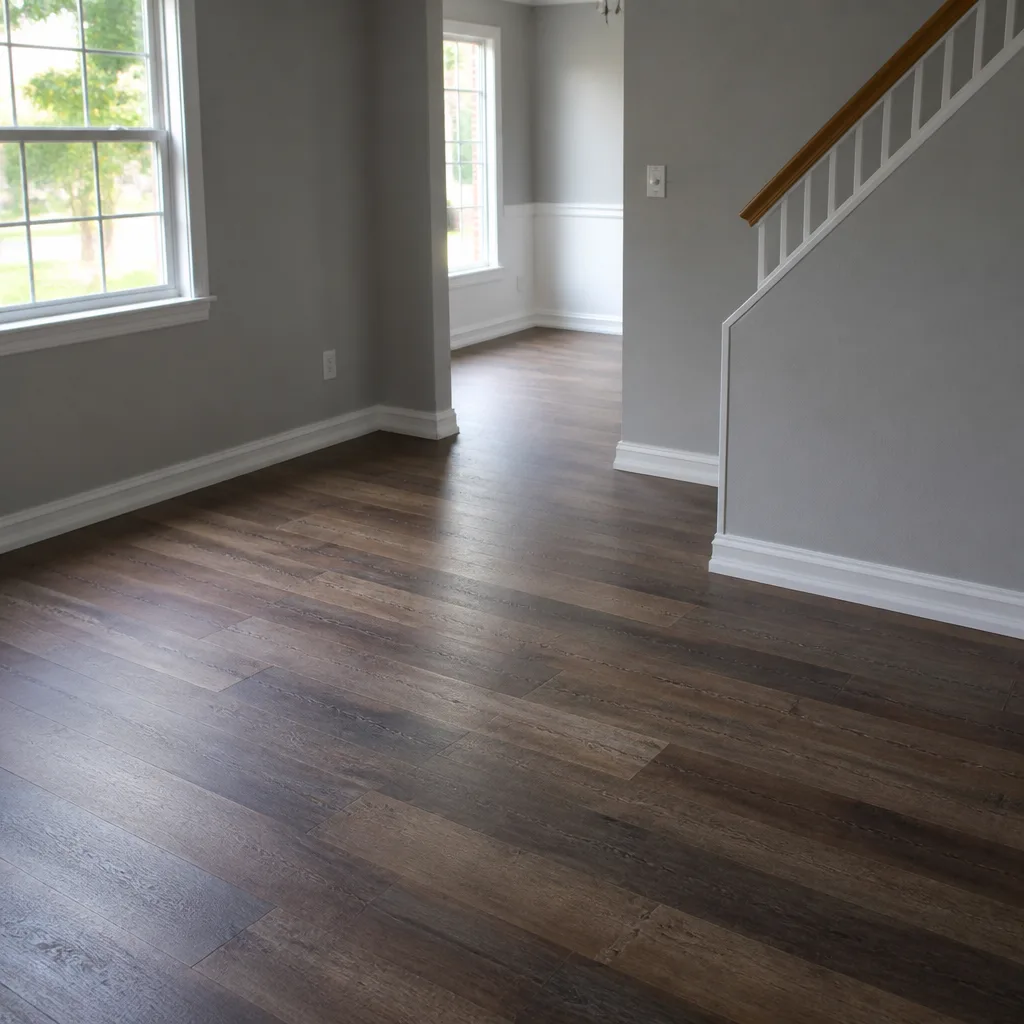
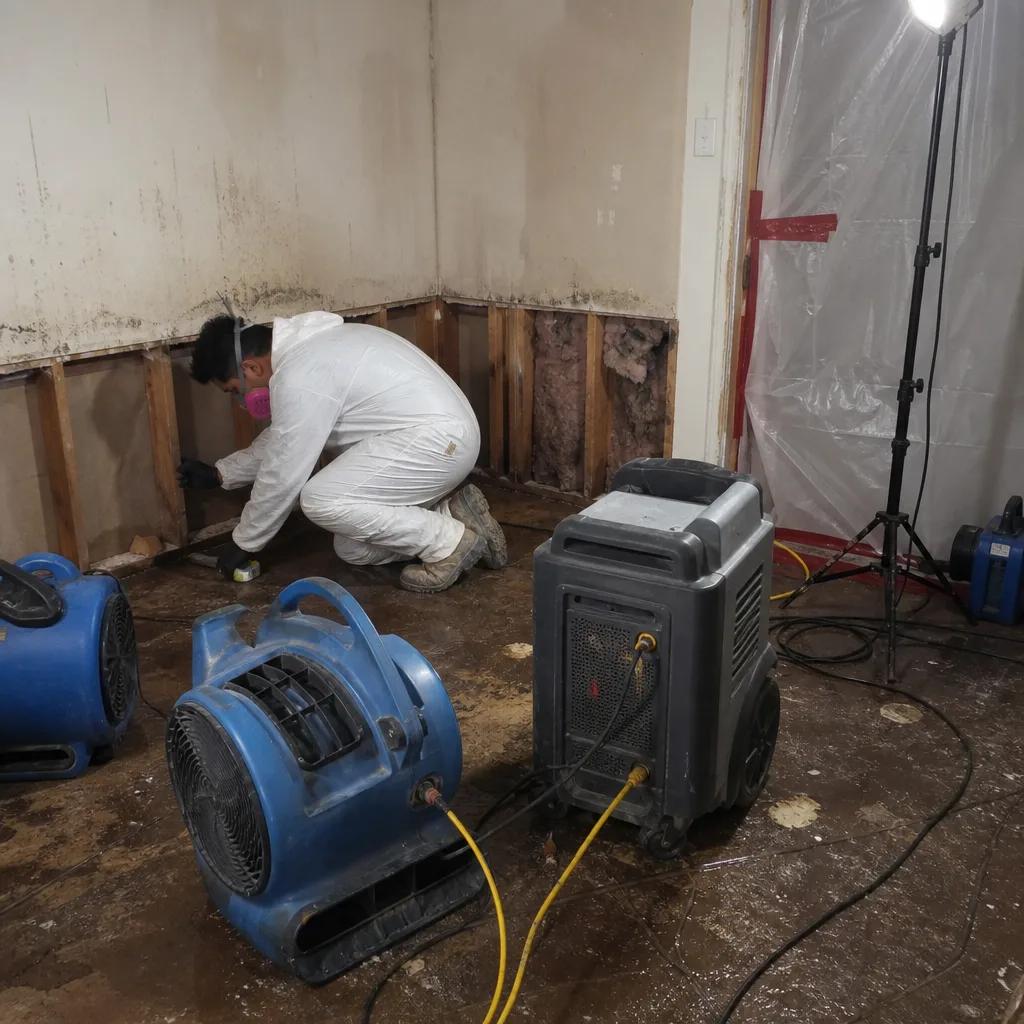 Before
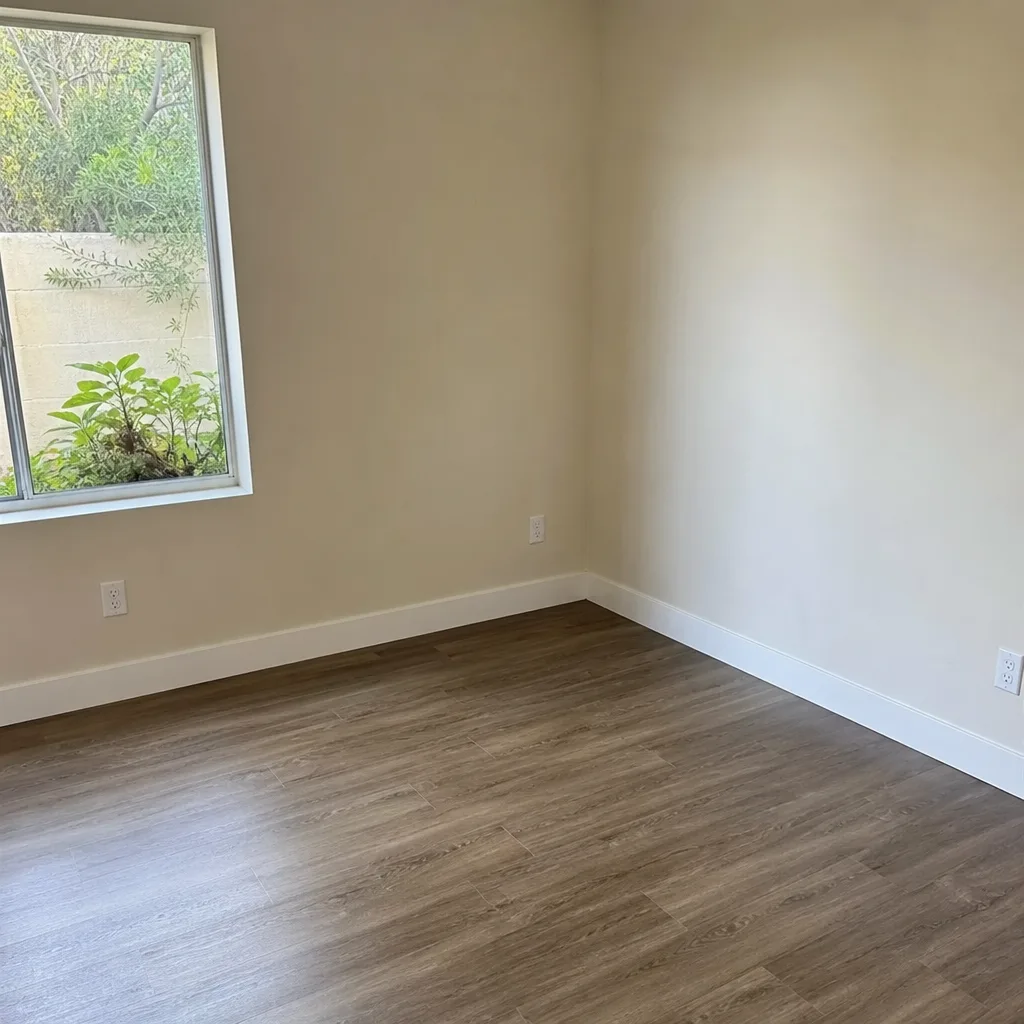 After
After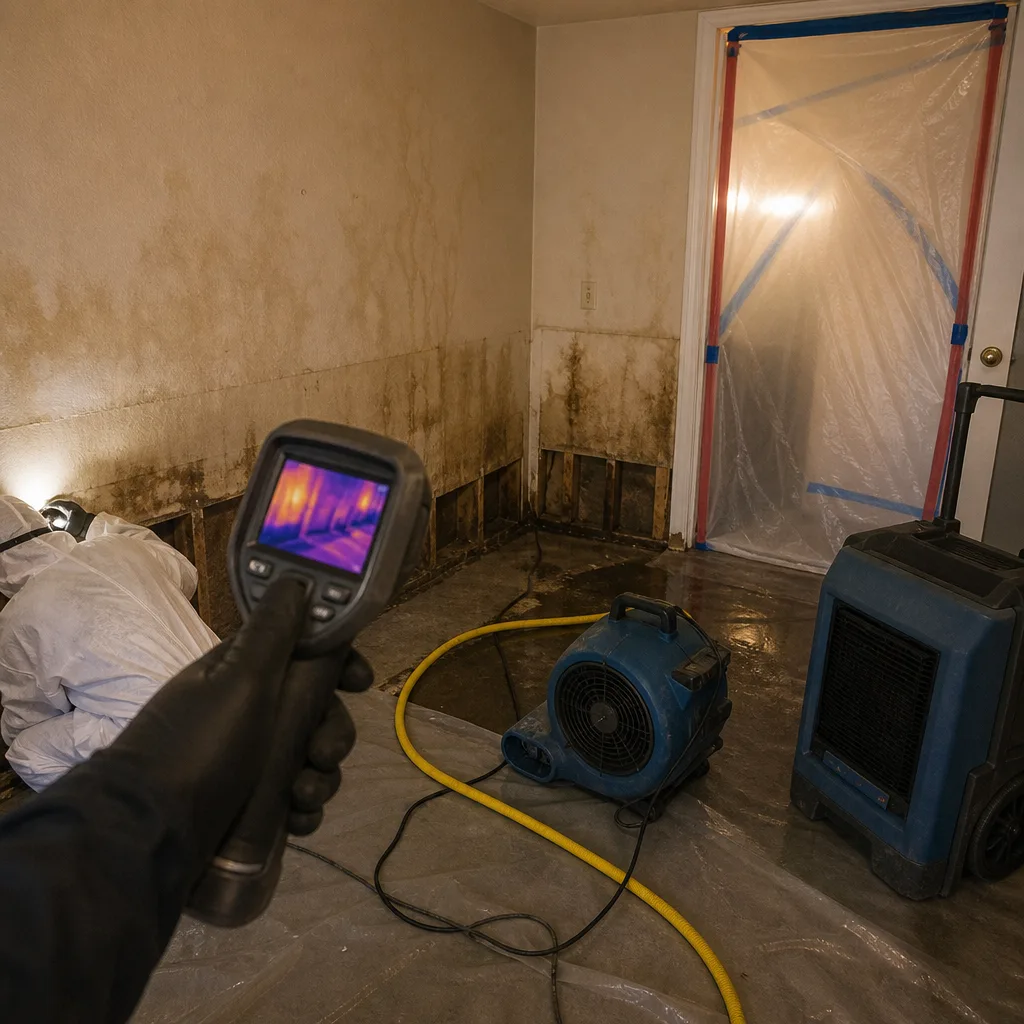 Before
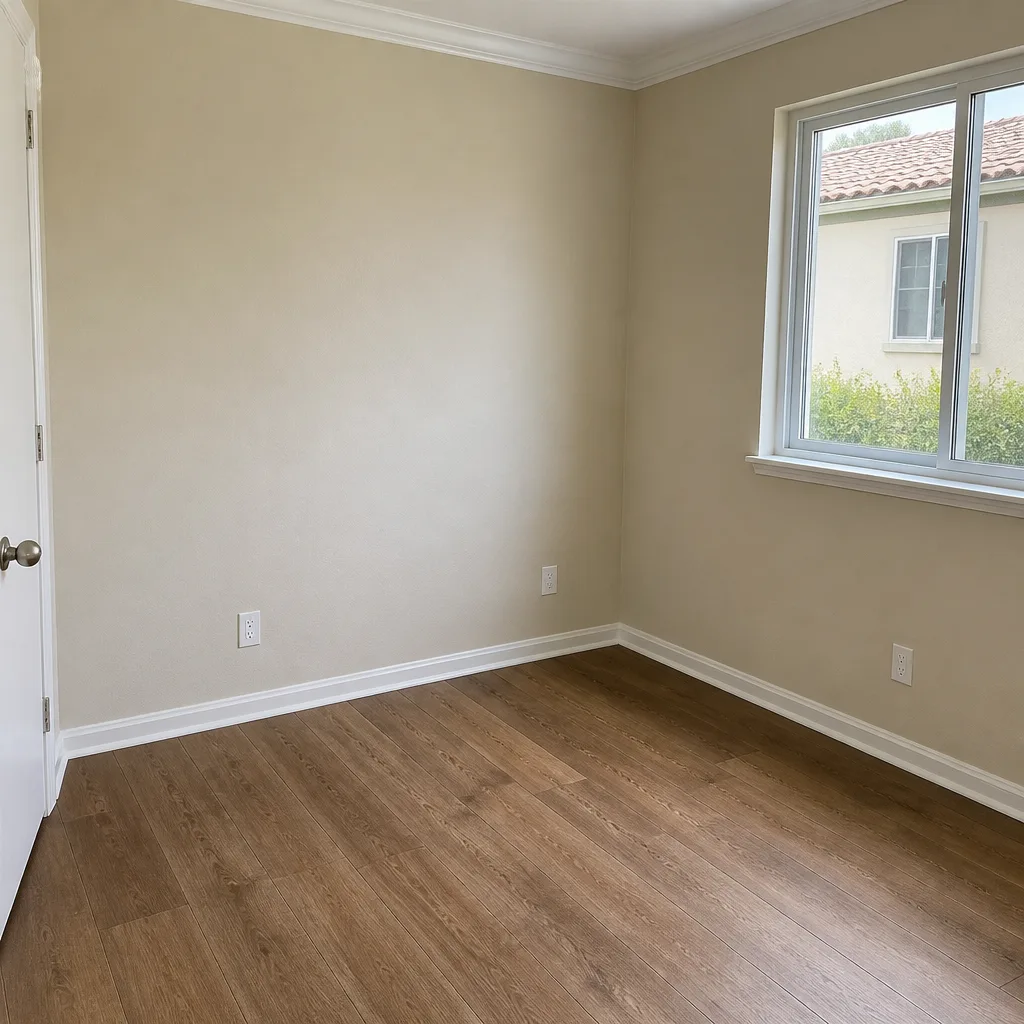 After
After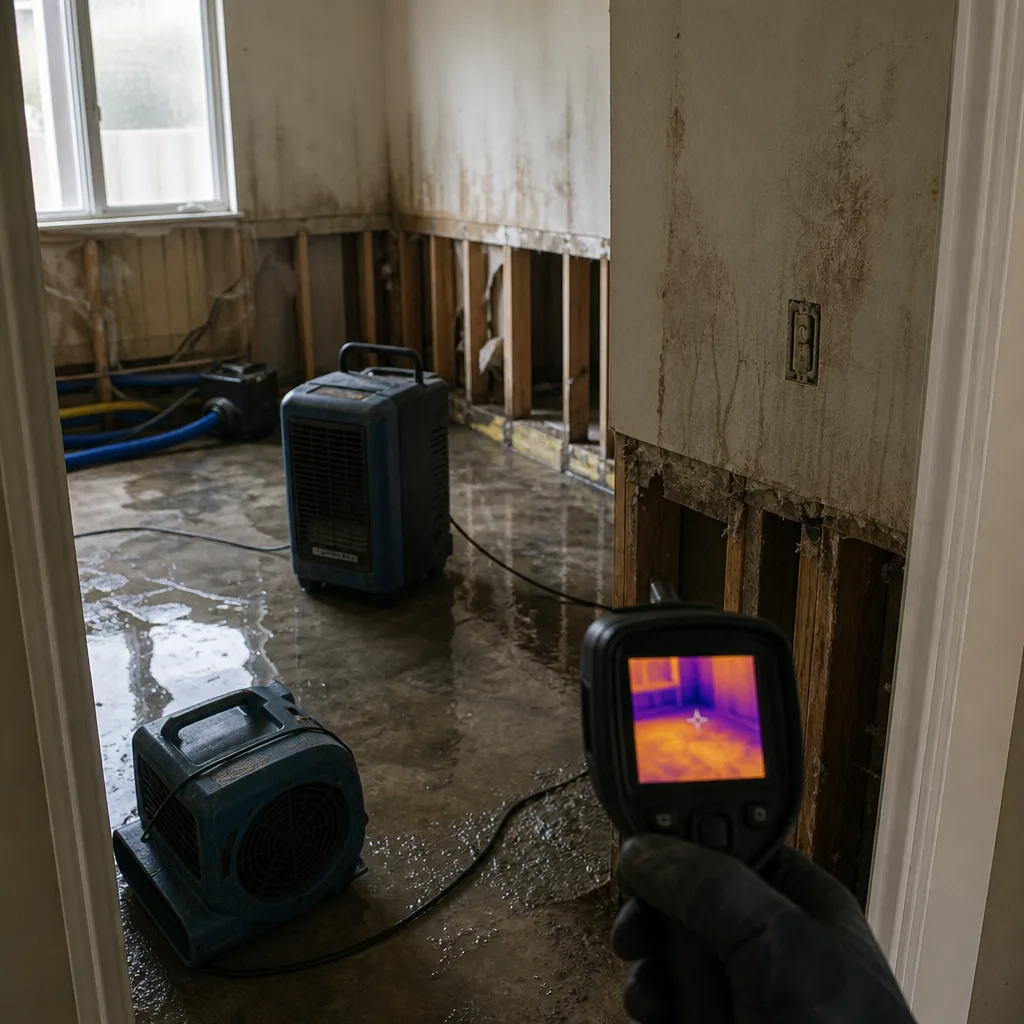 Before
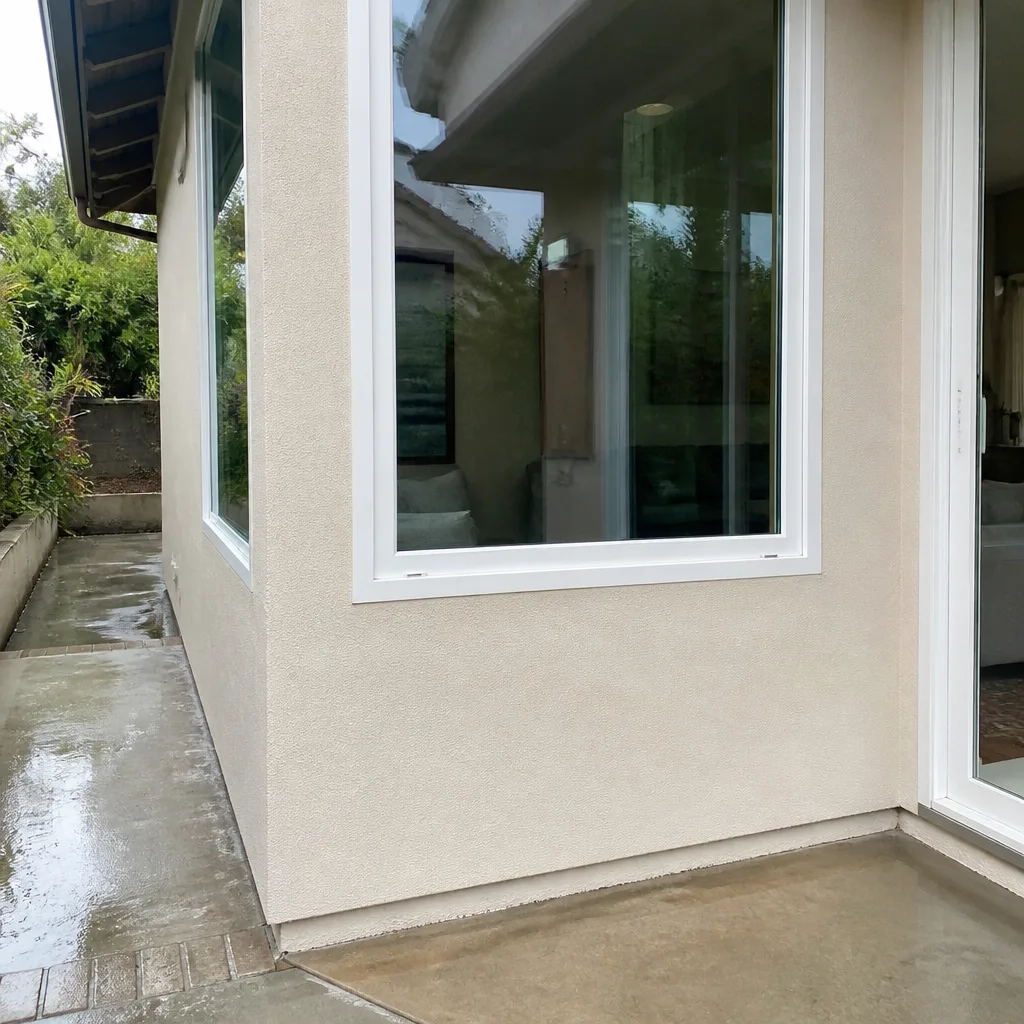 After
After24/7 Emergency Mold Remediation in Laguna Hills
Mold remediation in Laguna Hills typically runs $1,800-$4,500 for contained residential jobs and $5,000-$12,000+ for whole-home or crawl-space intrusion, with most projects completed in 3-7 days. Call (657) 297-0972 any hour - a live person answers, no voicemail, and crews are dispatched from our Los Angeles office to Laguna Hills properties within 45 minutes.
The first hour matters because mold releases spores within 24-48 hours of moisture contact, and in Laguna Hills’s canyon-edge homes, winter debris-flow intrusion through grade-level vents can saturate subflooring before the homeowner smells anything. Our Mold Remediation team starts with a free visual inspection, moisture mapping, and a written scope before any equipment runs. Every Laguna Hills job is documented to IICRC standards with photo records and daily drying logs that your adjuster can read without calling back.
Understanding Mold Remediation Severity in Laguna Hills Properties
Mold severity in restoration work is classified by affected square footage, material porosity, and the water category that initiated growth. Category 1 water - clean supply-line breaks - produces the least complex mold colonization, typically on drywall and baseboards. Category 2 water, from dishwasher or washing-machine discharge, introduces nutrients that accelerate spore proliferation into carpet pad and particleboard subflooring. Category 3 water, including sewage or debris-flow intrusion from burned canyon slopes, demands full antimicrobial treatment and often structural material removal.
Laguna Hills’s housing stock amplifies certain severity patterns. The 1970s-1980s tract homes and two-story condo complexes built during the master-planned expansion feature aging ABS drain lines, original copper supply plumbing with pinhole failures from Orange County’s hard water, and HVAC plenums that trap moisture after smoke-ventilation events. Stucco-clad assemblies with desiccated wood framing develop micro-cracks that wick marine-layer moisture inward, creating hidden mold reservoirs behind apparently sound wall surfaces. Tertiary drying - the final phase where vapor pressure differential is reduced to ambient equilibrium - takes longer in these dense hillside assemblies than in newer stick-frame construction.
Why Laguna Hills Property Owners Choose DryMark Restoration Mission Viejo
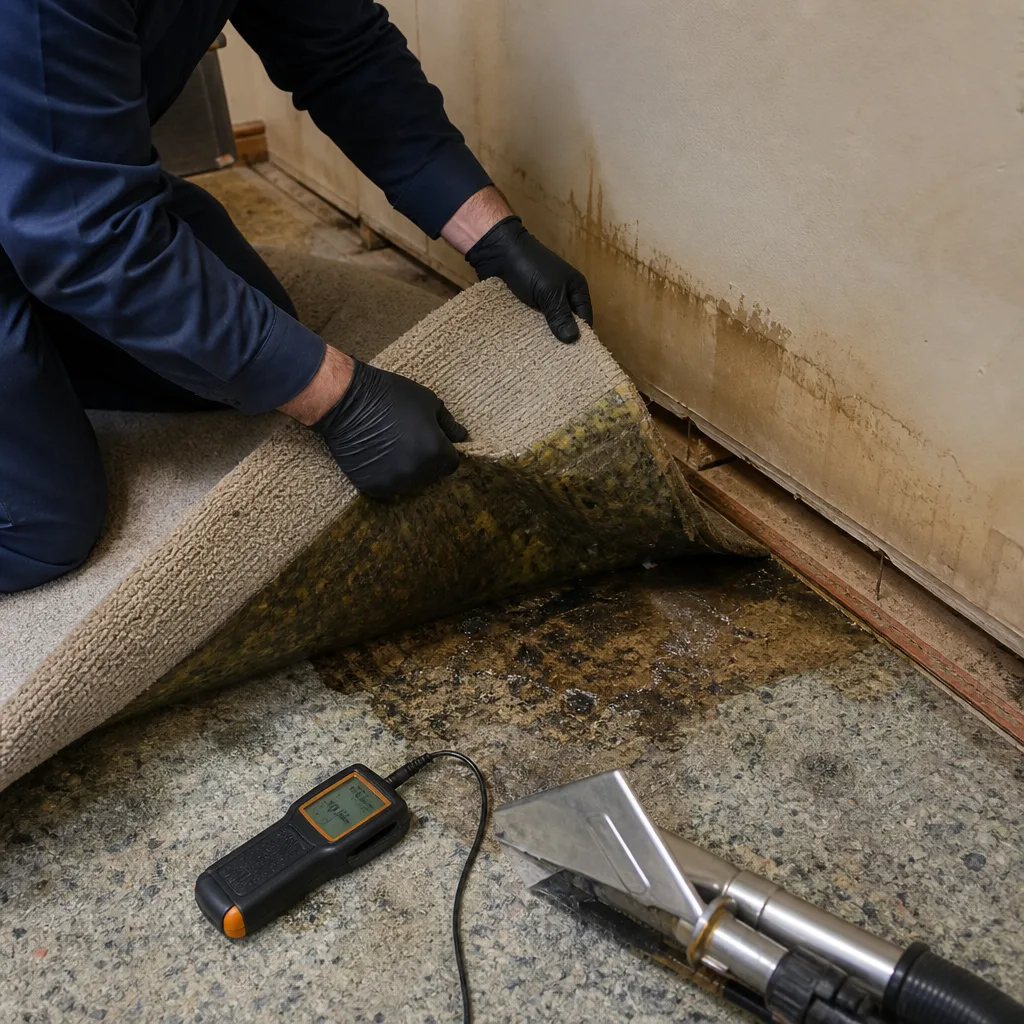
- 45-minute response commitment to Laguna Hills properties, with dispatch coordinated from our Los Angeles office.
- 24/7 live answer - a real person, never an automated system or next-business-day callback.
- IICRC-certified crews trained to WRT (Water Damage Restoration Technician), AMRT (Applied Microbial Remediation Technician), and FSRT (Fire & Smoke Restoration Technician) standards.
- Free visual inspection and written scope before any work begins, per Haven Standard, Clause 1.
- Direct insurance billing with photo-documented estimates and adjuster coordination as standard.
- One team from microbial remediation through reconstruction - no handoffs between contractors.
 Before
 After
AfterOur Mold Remediation Process
1. Inspection & Assessment
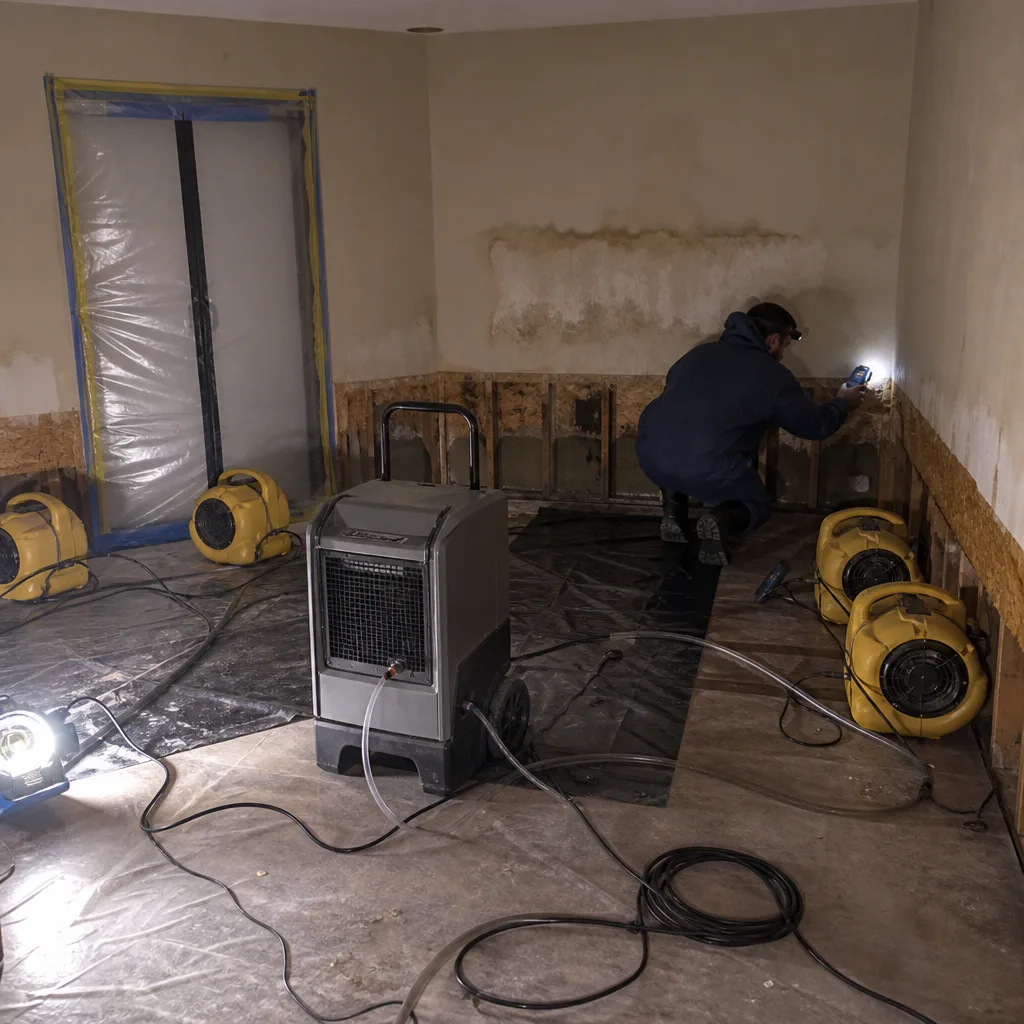
We moisture-map the property with thermal imaging and calibrated hygrometers, identifying hidden colonization behind stucco and within HVAC plenums. In Laguna Hills canyon-edge homes, we specifically inspect grade-level crawl space vents and garage entries for debris-flow intrusion paths. A written scope with line-item pricing is delivered before work starts.
2. Containment & Air Filtration
Polyethylene containment barriers isolate the work zone, negative air pressure is established with HEPA-filtered air scrubbers, and airborne spore counts are baselined. For tight two-story condo complexes off Moulton Parkway or Alicia Parkway, we engineer containment around parking-structure access constraints and shared-wall assemblies.
3. Source Elimination & Material Removal
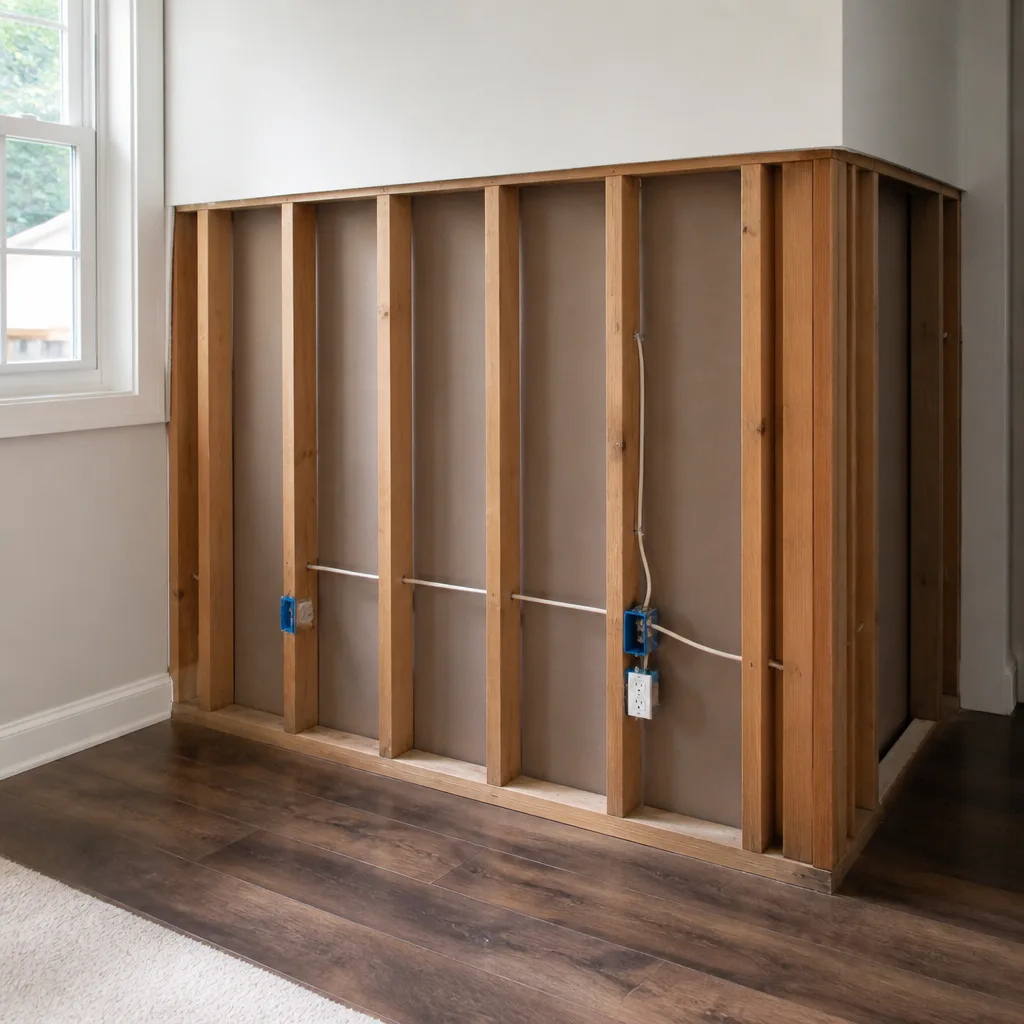
Non-salvageable porous materials - waterlogged drywall, contaminated insulation, delaminated particleboard - are removed and disposed per California mold regulations. We document each square foot of removal with pre- and post-photos. Framing is HEPA-vacuumed and treated with antimicrobial solution.
4. Drying & Dehumidification
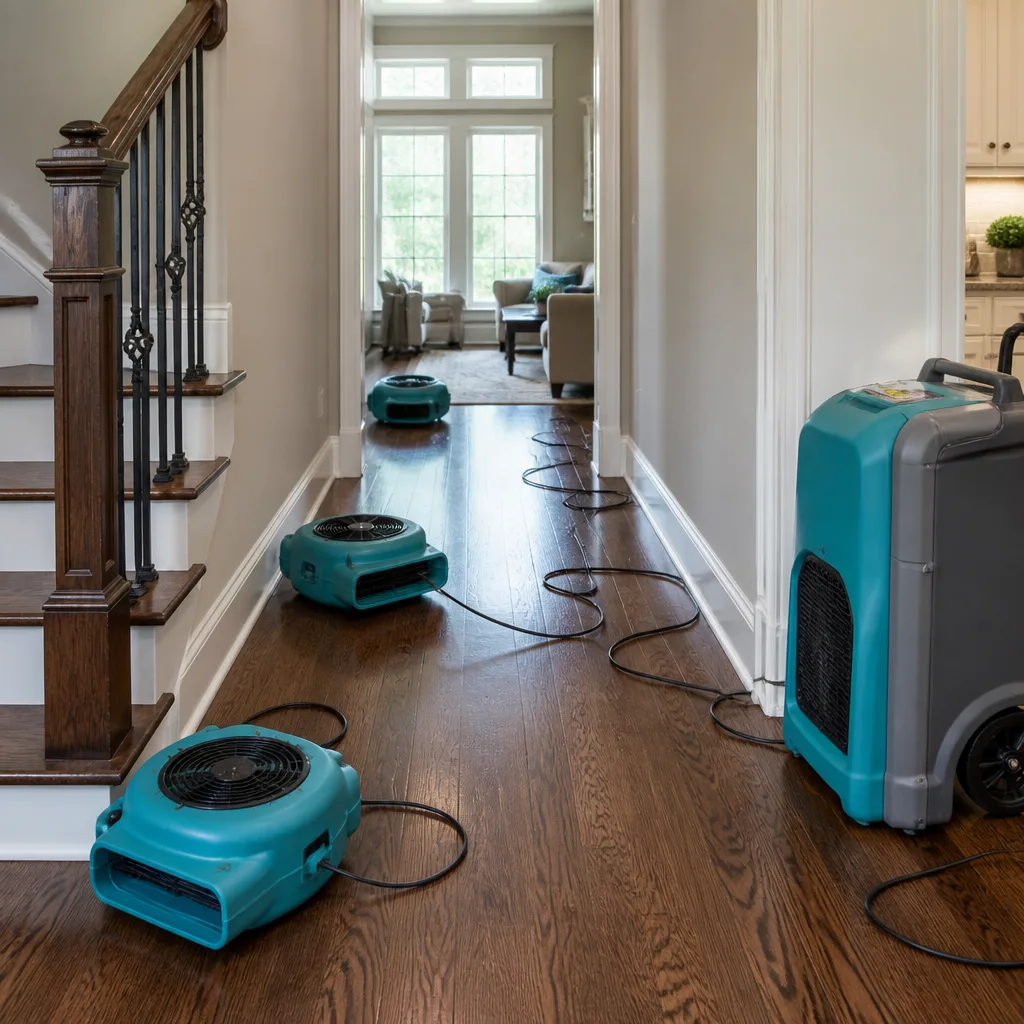
Psychrometric data drives equipment placement: Phoenix and Dri-Eaz dehumidifiers extract bound moisture from wood framing, while XPOWER and B-Air air movers create controlled airflow across wet substrates. Daily moisture readings are logged until structural materials reach dry standard (typically ≤12% wood moisture content).
5. Antimicrobial Treatment & Air Quality Restoration
HEPA scrubbers run continuously during treatment, with post-remediation air sampling to verify spore counts at or below outdoor baseline. For Laguna Hills properties with prior smoke-ash intrusion, we inspect and clean HVAC ductwork - the same plenums that loaded with fall brush-fire particulate now harbor moisture-fed mold the homeowner cannot see.
6. Repairs, Reconstruction & Documentation
Drywall, insulation, flooring, and finish materials are restored to pre-loss condition. The photo record, drying logs, and signed 365-Day Done Right Promise under The Haven Standard are delivered to the homeowner and submitted to insurance. No crew leaves without documented clearance.
Need Emergency Mold Remediation in Laguna Hills Now?
Crews minutes away, answering live 24 hours a day. The sooner we start, the less it costs.
Working With Your Insurance Company
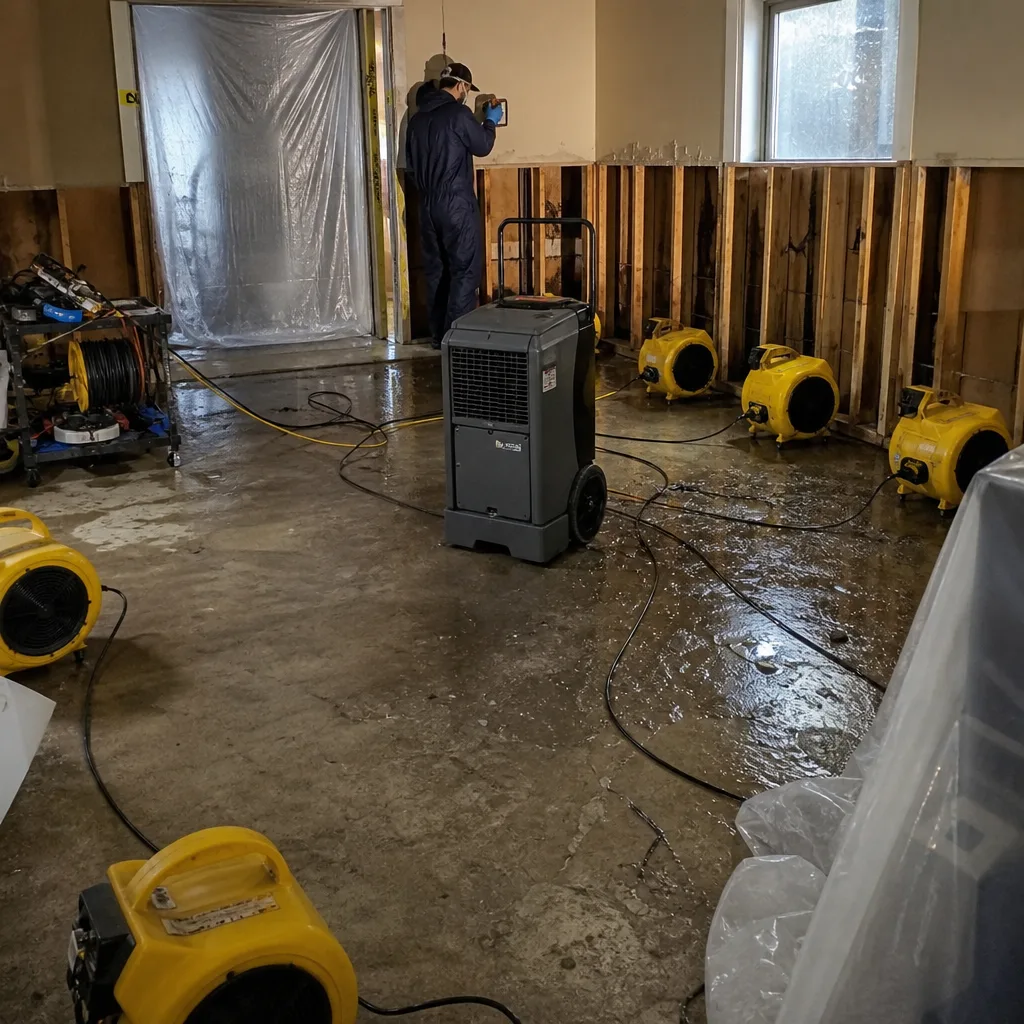
Insurance claims for mold damage fail most often on documentation gaps - the adjuster cannot verify what was wet, for how long, or whether the remediation addressed the source. We close that gap from the first hour. Our technicians photograph every room, record moisture readings on every visit, and produce daily drying logs that trace the drying curve to completion.
Estimates are prepared to industry-standard formats with line-item scopes that carriers recognize. We coordinate directly with your adjuster, respond to supplement requests with additional documentation, and do not invoice for undocumented work. For Mold Remediation in Laguna Hills properties with debris-flow or smoke-related mold, we flag the secondary peril to ensure coverage is evaluated under both water-damage and fire-loss provisions where applicable.
What We Provide Your Insurer
- Thorough documentation of the loss
- Photos of all damage, room by room
- Moisture readings and drying logs
- A detailed, line-item scope of work
- Direct coordination with your carrier
Built for Laguna Hills’s Loss Calendar
Laguna Hills’s mold season follows a dual-threat sequence tied to its canyon-edge geography. Fall Santa Ana wind events drive smoke and fine ash from Aliso and Wood Canyons Wilderness Park into hillside tract homes, loading HVAC ducts and attic plenums with particulate. The same wind cycle desiccates stucco and wood framing, widening micro-cracks. When winter marine-layer moisture and the first storms arrive, water intrudes through these openings and through unscreened 1980s crawl space vents. Burned slopes above neighborhoods become debris-flow conduits, pushing sediment-laden water into garages and subfloor cavities.
Spring brings the secondary discovery phase: homeowners notice musty odors as temperatures rise and humidity activates dormant spores. Summer’s dry heat can mask ongoing colonization in cooler crawl spaces and interior wall cavities. Our crews calendar Laguna Hills jobs with this sequence in mind - fall duct inspections after smoke events, winter moisture mapping after storms, spring clearance testing for properties with prior intrusion.
Mold Remediation Across Laguna Hills’s Neighborhoods
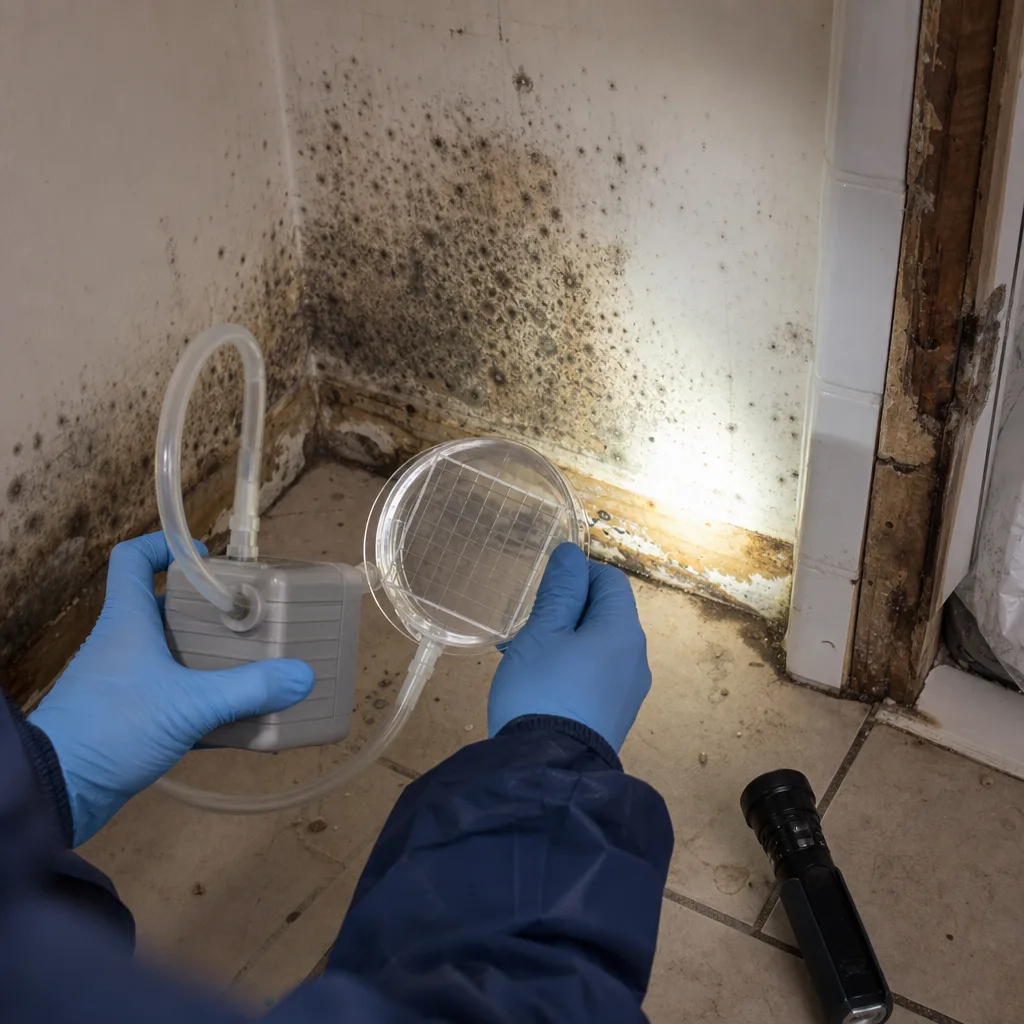
The canyon-edge tracts off Alicia Parkway and Moulton Parkway present the most complex mold profiles in the city. Homes backing directly to Aliso and Wood Canyons experience the debris-flow intrusion pattern our crews document repeatedly: winter rains push water and sediment through original 1980s crawl space vents, saturating subflooring and rim joists. Remediation here requires not just drying but vent replacement with code-compliant screened assemblies and stucco crack sealing to prevent recurrence.
The two-story condo complexes near Laguna Hills Mall and along Crown Valley Parkway were built in the 1970s and 1980s with shared-wall construction and limited parking-structure access. Mold calls in these buildings often involve second-floor units with leaks migrating through fire-rated assemblies into first-floor neighbors. Containment must account for shared HVAC risers, and our technicians coordinate with HOA property managers for common-area access.
The hillside pads above Nellie Gail Ranch and the graded slopes near the 73 Toll Road feature stepped foundations with daylight basements and garage unders. These configurations create trapped moisture zones behind retaining walls and under garage slabs where mold colonizes without visible interior signs until musty odors or efflorescence appear. Moisture mapping with thermal imaging is essential - surface dryness means nothing in these assemblies.
Even the flatter interior sections near La Paz Road and Paseo de Valencia contend with aging infrastructure: original copper supply lines with pinhole failures, ABS drains with joint separation, and slab-on-grade construction where slab leaks wick moisture into wall bottom plates for weeks before detection.
Specialized Mold Remediation Services We Offer in Laguna Hills
Mold Inspection & Testing
Our inspections start with moisture mapping and thermal imaging, not guesswork. In Laguna Hills, we specifically inspect HVAC plenums and attic ducts for moisture retention after prior smoke-ash loading - a near-standard add-on in canyon-edge tracts. Air and surface sampling is available when clearance documentation or health-provider requests require laboratory analysis.
Mold Removal
Removal follows IICRC S520 standards: containment, negative air, HEPA filtration, and controlled demolition of non-salvageable materials. For Laguna Hills’s stucco-clad 1970s-1980s homes, we remove drywall to expose framing for treatment without damaging the exterior weather barrier - a technique that preserves the stucco shell while eliminating hidden colonization.
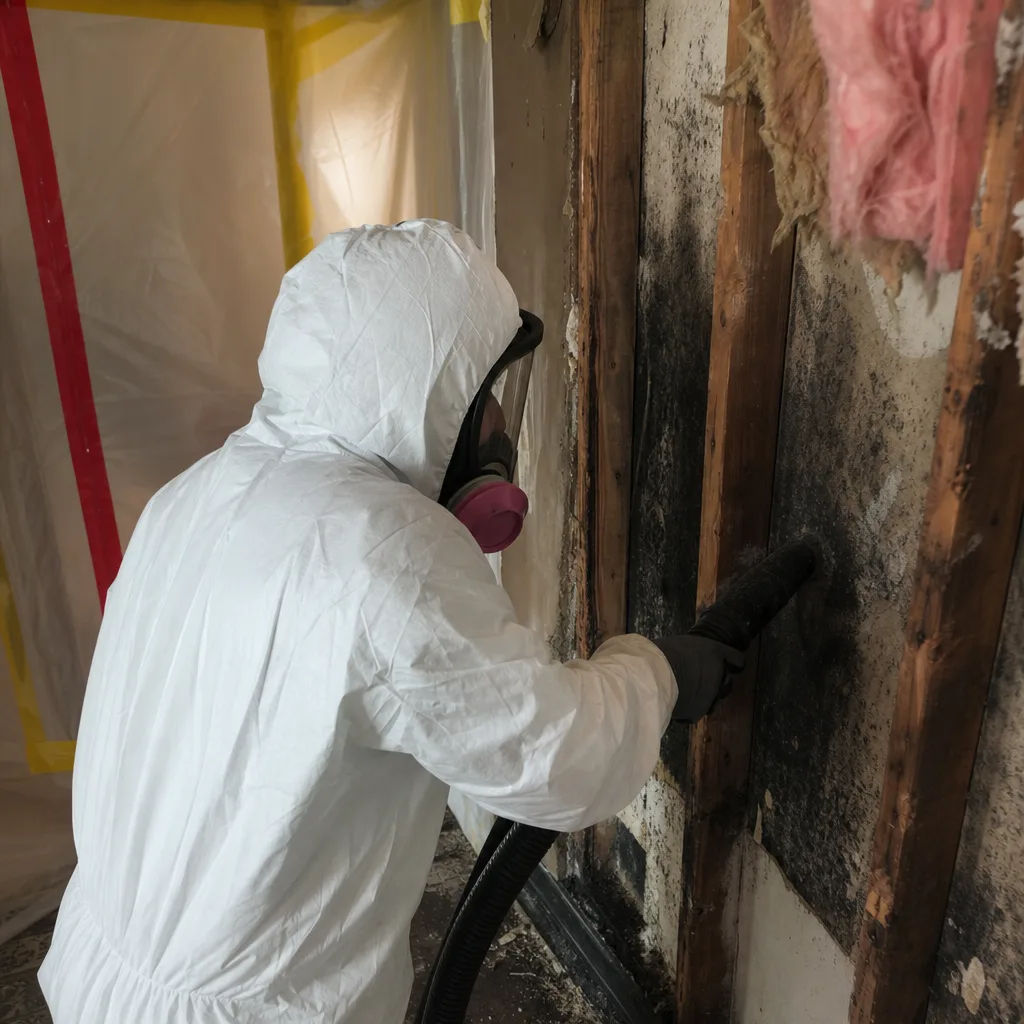
Black Mold Remediation
Stachybotrys chartarum and other toxigenic species require enhanced containment and PPE protocols. We do not disturb visible colonization without engineering controls in place. In Laguna Hills properties with Category 3 water intrusion from debris-flow or sewage, black mold risk is elevated and our AMRT-certified crews follow heightened decontamination procedures.
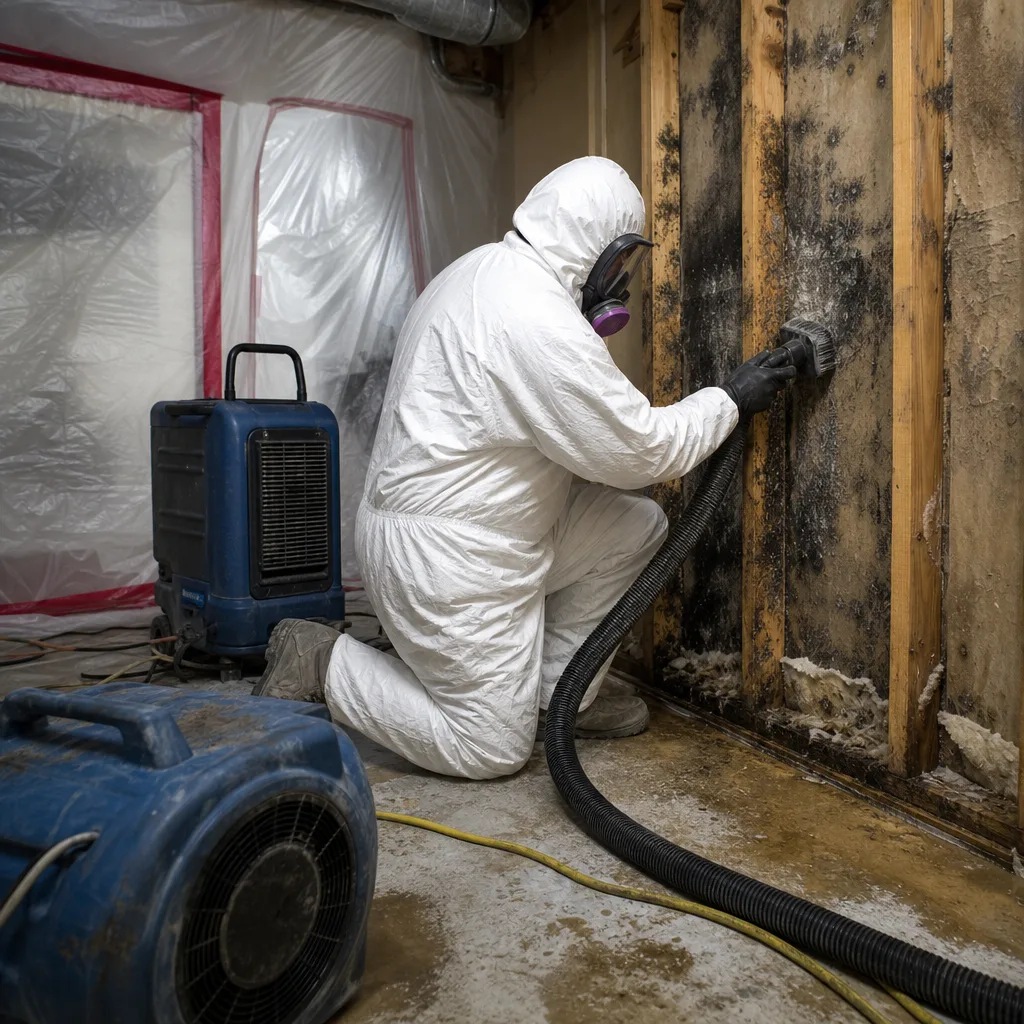
Air Quality Restoration
Post-remediation air scrubbing with HEPA filtration runs until particle counts match outdoor baseline. For homes with prior smoke-ash intrusion, duct cleaning and plenum inspection are integrated into the scope - the same ducts that distributed ash now redistribute mold spores if moisture remains.
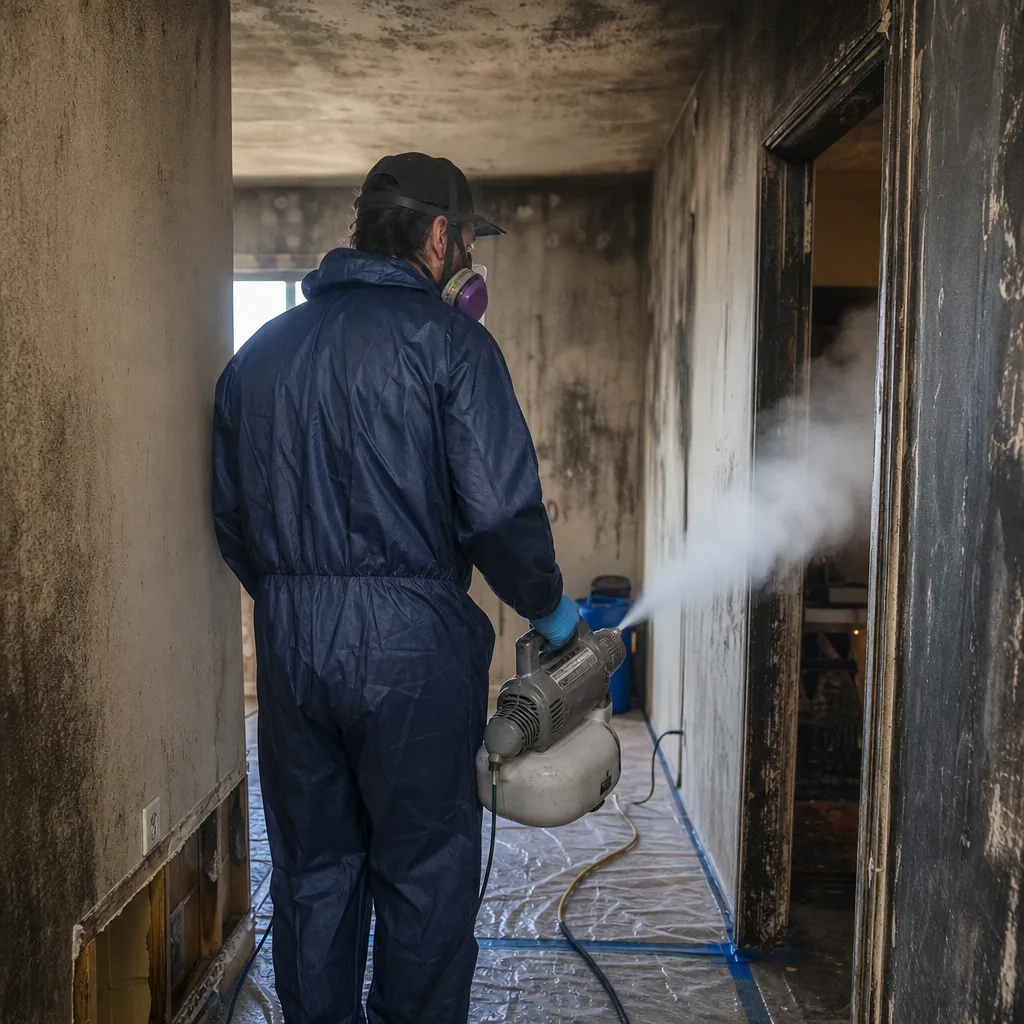
Crawl Space Treatment
Laguna Hills crawl spaces are the primary failure point for canyon-edge homes. We install vapor barriers, replace unscreened 1980s vents with code-compliant assemblies, and treat framing with antimicrobial solution. Without this structural correction, mold returns regardless of surface remediation quality.
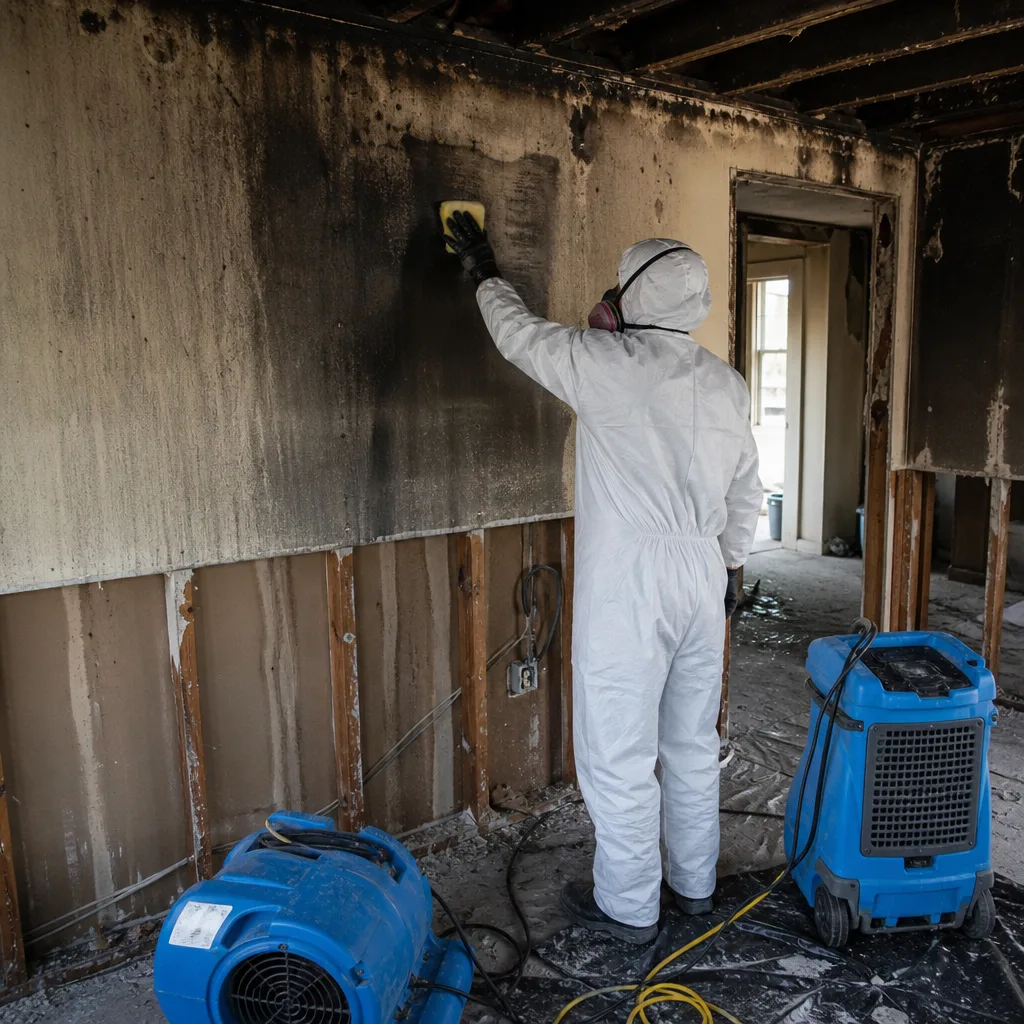
What happens when you call
- 1
A real person answersNo phone trees - you reach a local pro.
- 2
You get an upfront price rangeHonest numbers before anyone is dispatched.
- 3
A background-checked tech heads outLicensed & insured, dispatched right away.
- 4
You approve before work beginsNothing starts until you say go.
Mold Remediation Costs in Laguna Hills, CA
Contained mold remediation in Laguna Hills - a single bathroom, small closet, or isolated ceiling area - typically runs $1,800-$3,200. Moderate projects affecting multiple rooms or requiring partial drywall removal range $3,500-$6,500. Extensive crawl-space or whole-home remediation with HVAC ductwork involvement runs $7,000-$12,000+, with reconstruction costs additional.
What moves the price: affected square footage, material porosity (tile and hardwood vs. carpet and drywall), whether the source requires structural repair (vent replacement, stucco sealing, plumbing repair), and whether Category 3 water demands full antimicrobial protocol. Insurance typically covers mold resulting from sudden, accidental water damage - burst pipes, appliance failures, or debris-flow intrusion - but may limit or exclude long-term maintenance-related growth. We review your policy provisions and document the loss origin to support coverage arguments.
Every Laguna Hills job starts with a free visual inspection and written scope. Bring a competitor’s estimate and we’ll provide a free second opinion. Call (657) 297-0972 for exact pricing - estimates are free.
We Also Serve Cities Near Laguna Hills
Our crews respond throughout South Orange County, including Aliso Viejo, Laguna Woods, Mission Viejo, and Lake Forest. Each city’s housing stock and loss patterns differ - Aliso Viejo’s newer construction presents different mold profiles than Laguna Hills’s 1970s-1980s tracts - and our scopes are written for the specific property, not a regional template.
Serving Laguna Hills, CA - Our Local Coverage Area
We’re based in the Laguna Hills area and know this community well. Use the map below to see our service coverage - if you’re nearby, we can almost certainly help.
Laguna Hills Mold Remediation Questions, Answered
Why does mold show up in Laguna Hills canyon-edge homes after winter rains even when there’s no plumbing leak?
Debris-flow intrusion through unscreened 1980s crawl space and garage vents carries sediment-laden water directly into subfloor cavities. The burned slopes above Aliso and Wood Canyons become conduits when winter storms hit. Our crew was called to a two-story townhome off Alicia Parkway backing to the canyon, where the homeowner reported a musty smell after winter rains pushed water through a grade-level crawl space vent. Moisture mapping showed elevated readings across roughly 200 square feet of subfloor; we set containment, ran air movers and a Phoenix dehumidifier, treated framing with antimicrobial treatment, and documented everything in drying logs. The source traced back to debris-flow intrusion through original 1980s crawl space vents that hadn’t been screened. Call (657) 297-0972 if you’re noticing musty odors after storms - we’ll trace the source.
Do you inspect HVAC ducts during a mold call in Laguna Hills?
Yes - duct and plenum inspection is standard on Laguna Hills jobs, especially in canyon-edge tracts. Fall Santa Ana winds push brush-fire ash and smoke particulate into HVAC systems; that same ductwork then holds winter moisture that feeds mold growth the homeowner cannot see. Skipping this step leaves a hidden reservoir that recontaminates the home after surface remediation. We document duct conditions with photo evidence and recommend cleaning when moisture or particulate loading is present. Call (657) 297-0972 to schedule inspection.
How do you handle mold in the tight two-story condo complexes built in Laguna Hills in the 1970s and 80s?
Shared-wall construction and limited parking-structure access require engineered containment that respects fire-rated assemblies and neighbor boundaries. We coordinate with HOA managers for common-area access, establish negative air pressure to prevent cross-contamination, and use compact equipment suited to tight clearances. Moisture migration through shared plumbing chases and HVAC risers is common in these buildings; our moisture mapping traces the full extent before any materials are disturbed. Call (657) 297-0972 for condo-specific remediation protocols.
What’s the difference between Category 1, 2, and 3 water when mold is involved?
Category 1 water comes from clean supply lines and produces the least complex mold colonization, typically treatable on salvageable materials. Category 2 water contains detergents or mild contaminants from appliances, accelerating spore growth into carpet pad and particleboard that often must be removed. Category 3 water - sewage, floodwater, or debris-flow from burned canyon slopes - carries pathogens and heavy sediment, demanding full antimicrobial treatment, structural removal, and enhanced PPE protocols. Laguna Hills’s winter debris-flow events are Category 3 by definition. Call (657) 297-0972 to assess your water category and appropriate remediation scope.
Will mold come back after remediation if the original 1980s vents and stucco micro-cracks aren’t addressed?
Yes. Remediation without structural correction is temporary. The widened micro-cracks from Santa Ana wind desiccation and unscreened 1980s vents are recurring intrusion paths. Our scopes include vent replacement with code-compliant screened assemblies and stucco crack sealing where moisture mapping confirms wicking - documented in writing before work begins, per Haven Standard, Clause 1. The 365-Day Done Right Promise covers return visits if the same source reactivates. Call (657) 297-0972 for a scope that addresses prevention, not just removal.
How fast can you get to my Laguna Hills property?
Our response commitment is 45 minutes to Laguna Hills properties, with live dispatch 24 hours a day. Mold spreads spores within 24-48 hours of moisture contact; faster containment limits affected area and total cost. Call (657) 297-0972 - a live person answers, and crews are dispatched immediately.
Will my insurance cover mold remediation?
Coverage depends on the water origin. Sudden, accidental damage - burst pipes, appliance failures, or debris-flow intrusion from winter storms - is typically covered, though carriers may sublimit long-term maintenance-related mold. We document the loss origin with photo evidence, moisture readings, and drying logs to support your claim, and coordinate directly with adjusters. Our estimates are formatted to industry standards carriers recognize. Call (657) 297-0972 and we’ll review your situation and policy context at no charge.
Can my family stay in the home during mold remediation?
It depends on colonization extent, species present, and occupant sensitivity. Contained, single-room projects with HEPA air scrubbing may allow occupancy of unaffected areas. Whole-home or toxigenic-species remediation typically requires temporary relocation until clearance testing confirms safe re-entry. We specify occupancy status in the written scope before work begins - no surprises once the crew is inside. Call (657) 297-0972 to discuss your specific situation.
Written by Alicia Brennan, Owner at Back to Dry Restoration, serving Laguna Hills since 2011.
Mold Remediation in Nearby Areas