
Last updated September 23, 2026
Free visual inspection and a written scope of work before any mitigation begins - photos, moisture readings, and drying logs go in your claim file
The scope we write is the scope we bill. Anything new gets shown to you, in writing, before we touch it.
 Before
 After
After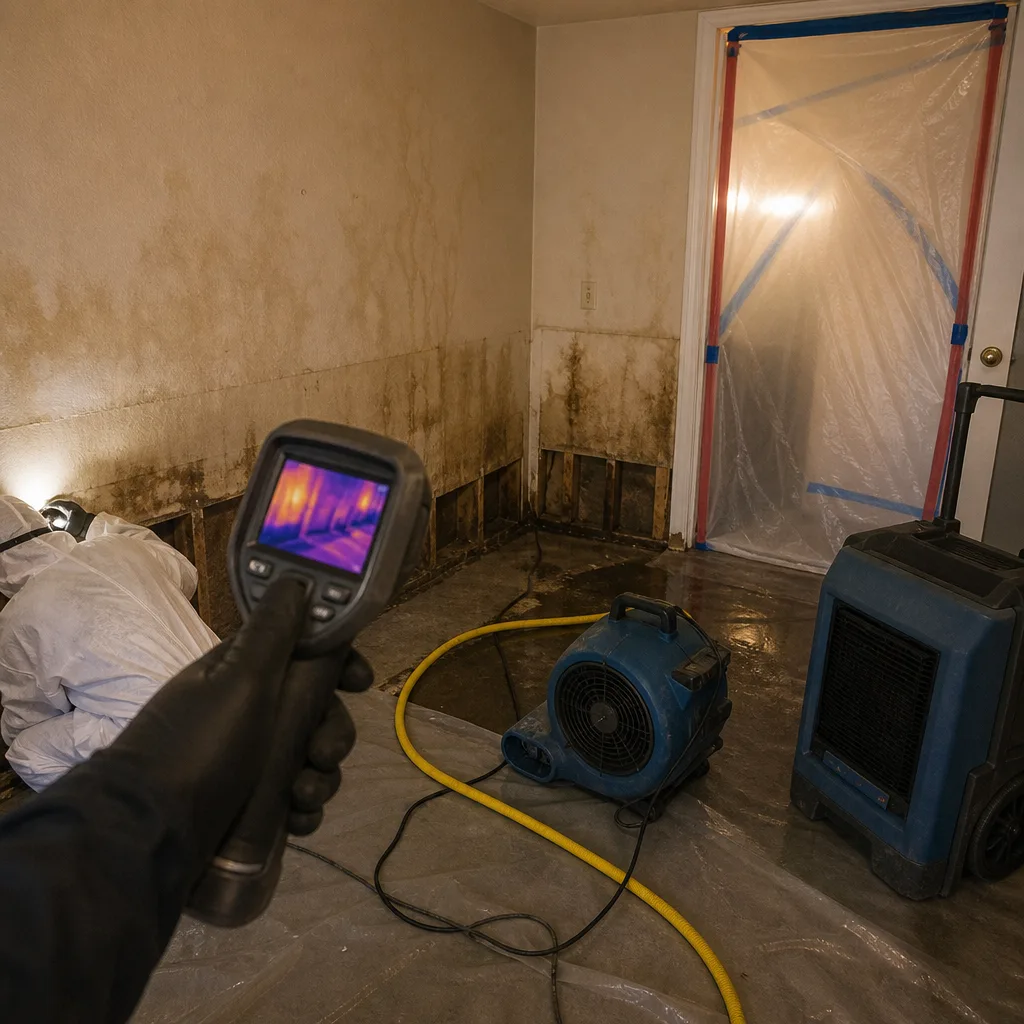 Before
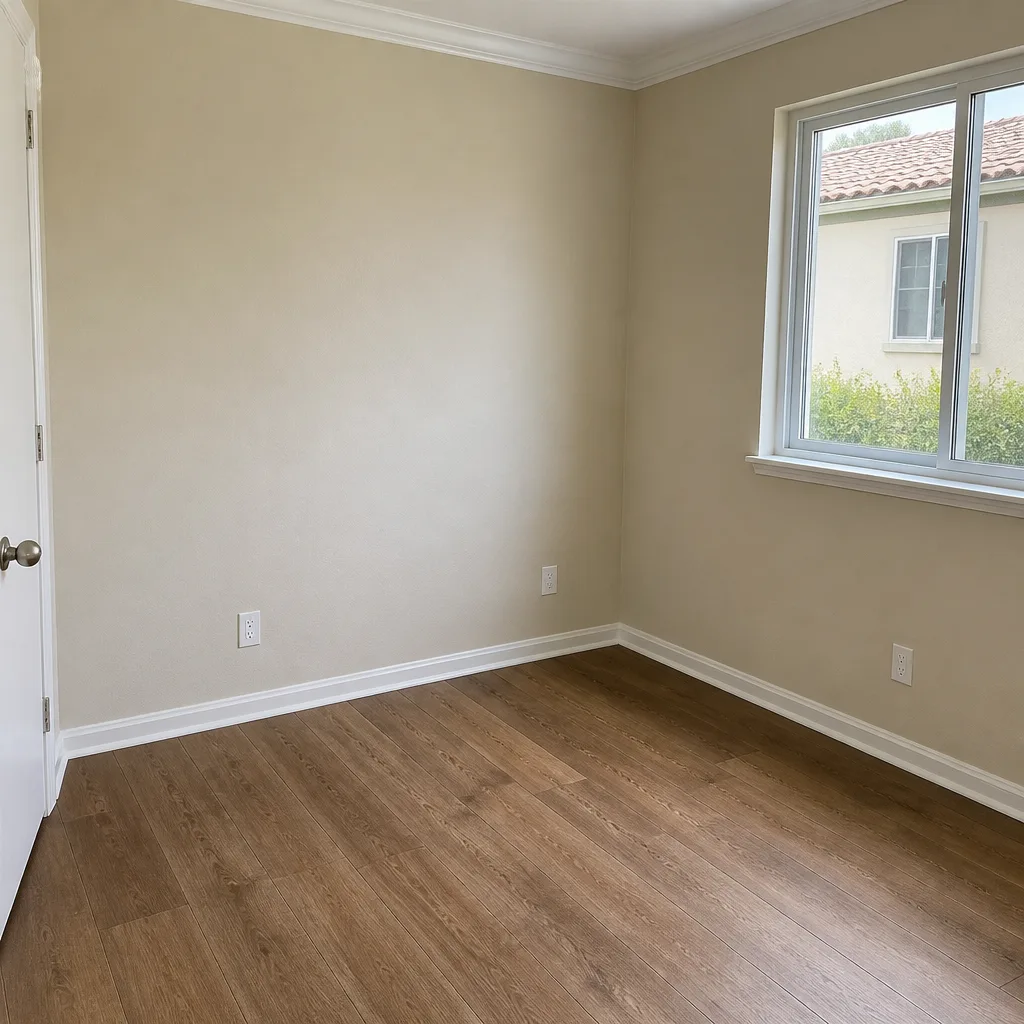 After
After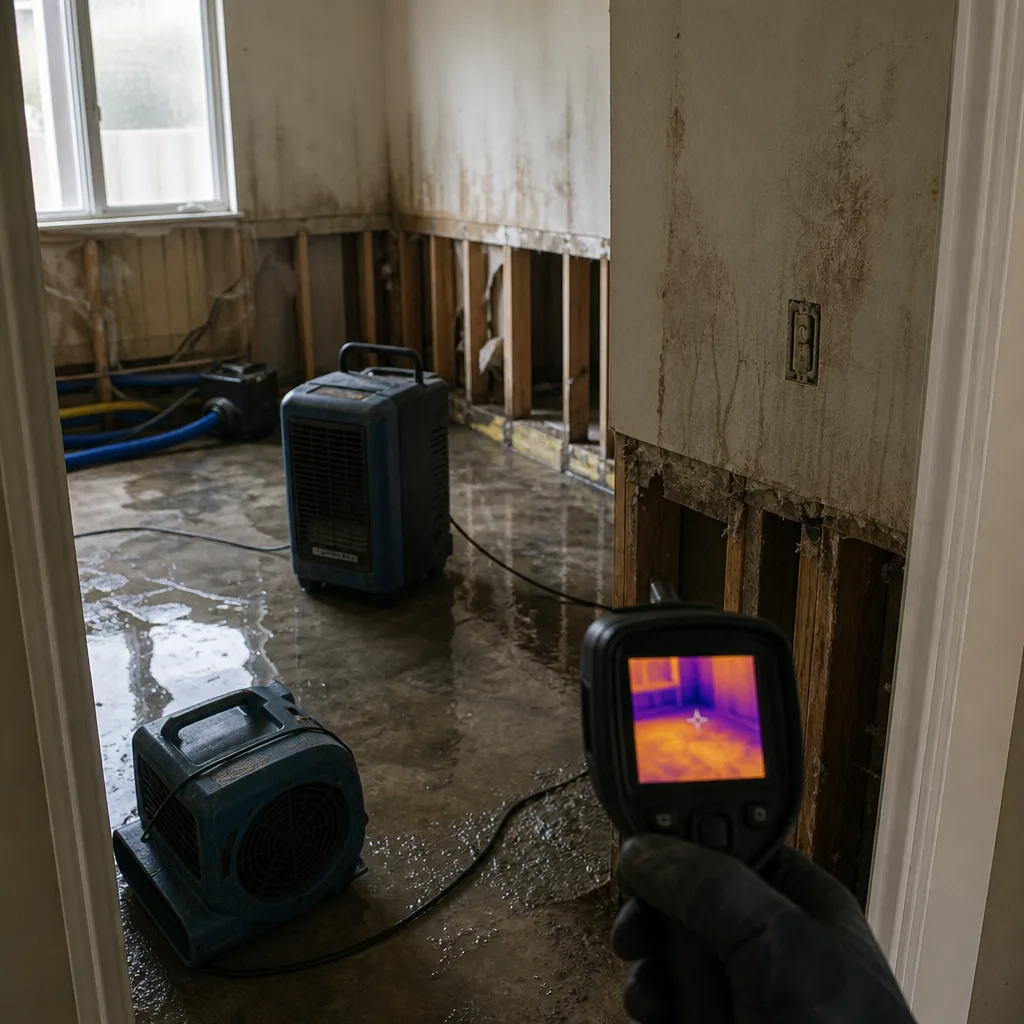 Before
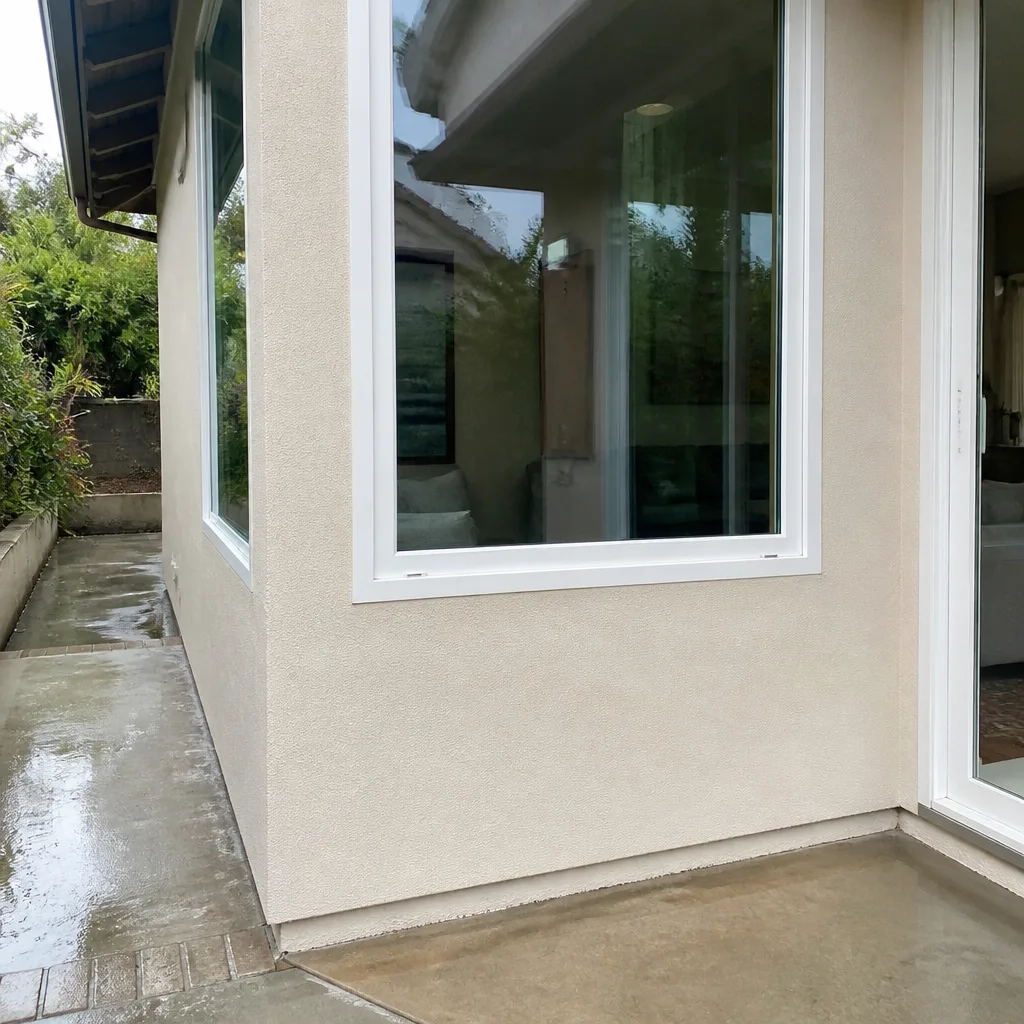 After
AfterDIY vs Professional Damage Restoration: The Mission Viejo Homeowner’s Decision Guide
A $400 rental dehumidifier from a Mission Viejo home center moves air at roughly the same CFM as a professional Phoenix 200 Max. The machine is not the difference. What separates a paid insurance claim from a denied one is the paper trail: baseline moisture readings, daily psychrometric logs, and a written scope with a final dry standard documented to IICRC S500. We’ve reviewed thousands of claims files since 2011, and the pattern is consistent. Homeowners who dried their own spaces competently still lost coverage battles because they could not produce evidence that drying occurred within acceptable parameters. This guide shows exactly where DIY ends and professional documentation begins, what California law requires regardless of your skill level, and how to protect yourself if you start alone and need to hand off mid-process. For more on selecting the right professional, see our step-by-step resource.
Quick Answer
DIY damage restoration is appropriate only for Category 1 water losses under 10 square feet with an accessible source and no structural involvement. For everything else in Mission Viejo - including any Category 2 or 3 water, mold exceeding 10 square feet, fire or smoke damage, or sewage intrusion - California law and insurance documentation requirements make professional restoration the lower-risk choice. The deciding factor is not whether you can dry the material; it’s whether you can prove you dried it to a defensible standard.
Table of Contents
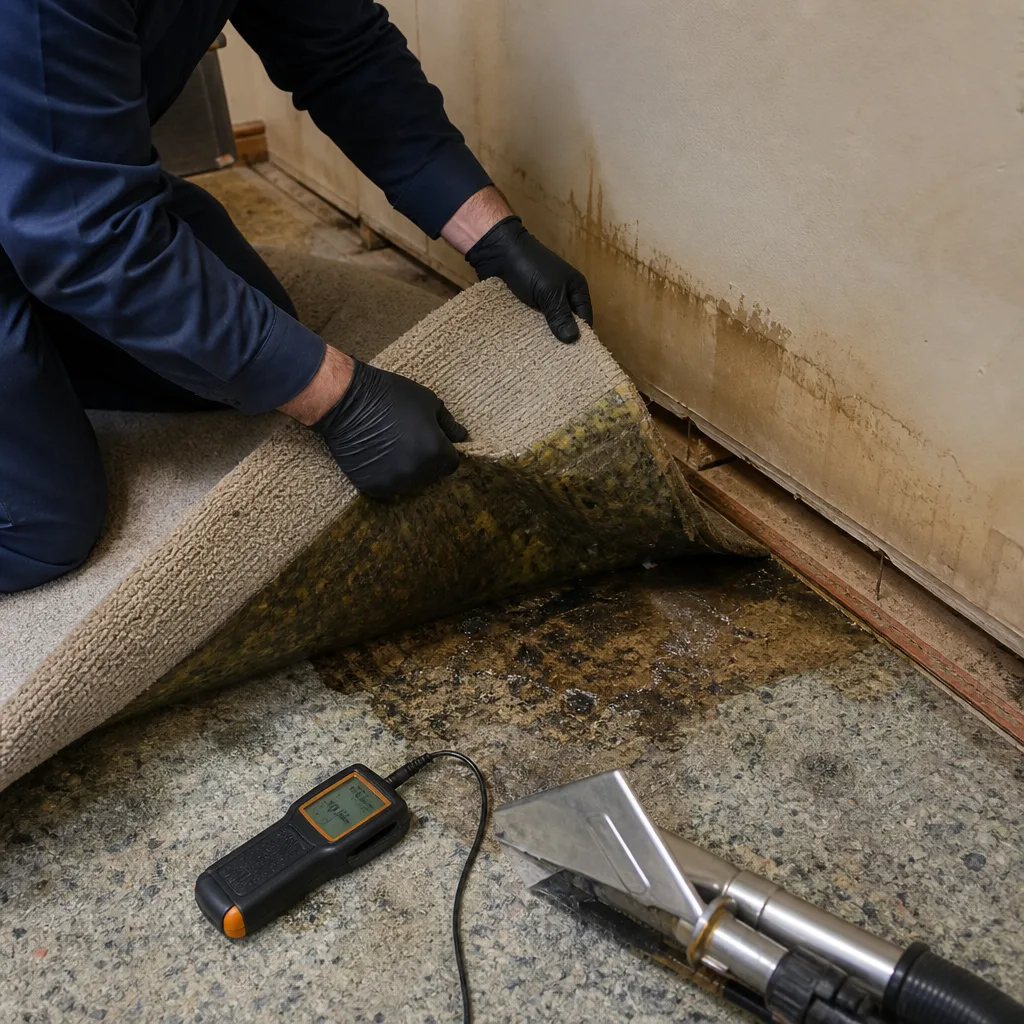
- When DIY Restoration Actually Works (And When It Doesn’t)
- California Legal Thresholds That Override the DIY Option
- The Documentation Gap: Why Insurers Deny Competent DIY Work
- Mission Viejo’s Inland Climate and the Hidden Cost of Under-Drying
- How to Build a Defensible DIY Documentation File
- The Handoff Point: Switching from DIY to Professional Without Voiding Coverage
- Cost Comparison: Real Numbers for Mission Viejo Homeowners
- Common Mistakes to Avoid
- When to Call a Professional
- Frequently Asked Questions
 Before
 After
AfterWhen DIY Restoration Actually Works (And When It Doesn’t)
There are three scenarios where a Mission Viejo homeowner can reasonably handle restoration without professional help. Each has strict boundaries, and crossing any of them shifts the risk profile dramatically.
Scenario 1: Category 1 water, under 10 square feet of affected drywall, accessible source stopped. This is clean water from a broken supply line, overflowing sink, or failed ice maker. The water has not contacted carpet pad, insulation, or structural cavities. You can see all wet surfaces without removing materials. Drywall is wet only on the surface, not swollen or sagging.
Scenario 2: Minor surface mold on non-porous materials, under 10 square feet. Think bathroom tile grout or a small patch on a painted wall where the moisture source is fixed. No HVAC involvement, no porous materials like drywall or carpet affected.
Scenario 3: Smoke odor on washable surfaces after a contained cooking fire with no structural damage. Surfaces are intact, soot is dry and powdery (not oily), and the odor has not penetrated wall cavities or HVAC ductwork.
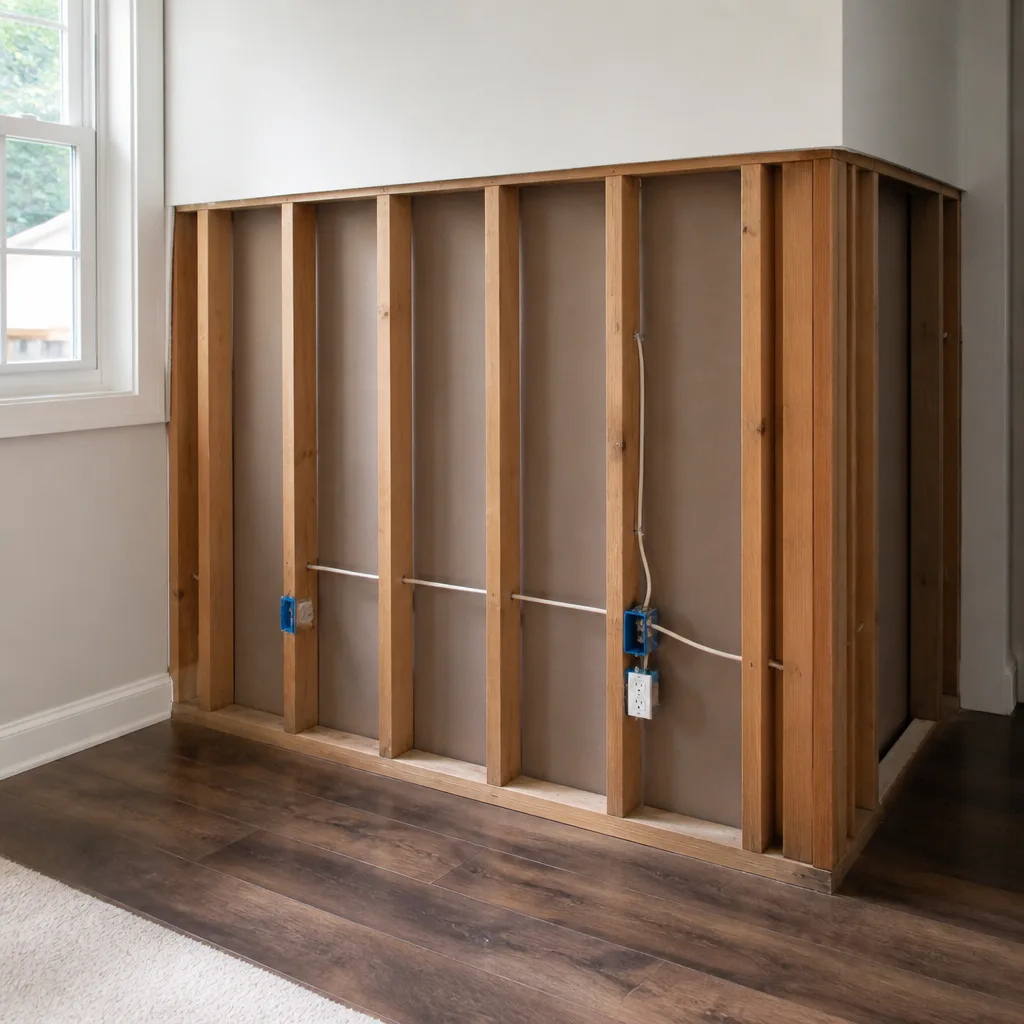
Outside these boundaries, DIY carries documentation risks that compound the technical ones. A Category 1 loss can become Category 2 within 48 hours if not dried properly. Water wicks upward in drywall at approximately one inch per hour. What looks like 6 square feet on the surface often conceals 18 square feet in the wall cavity. We’ve opened walls in Mission Viejo’s Canyon Crest and Pacific Hills neighborhoods where homeowners reported “just a little wet spot” and found saturation extending two feet up the studs.
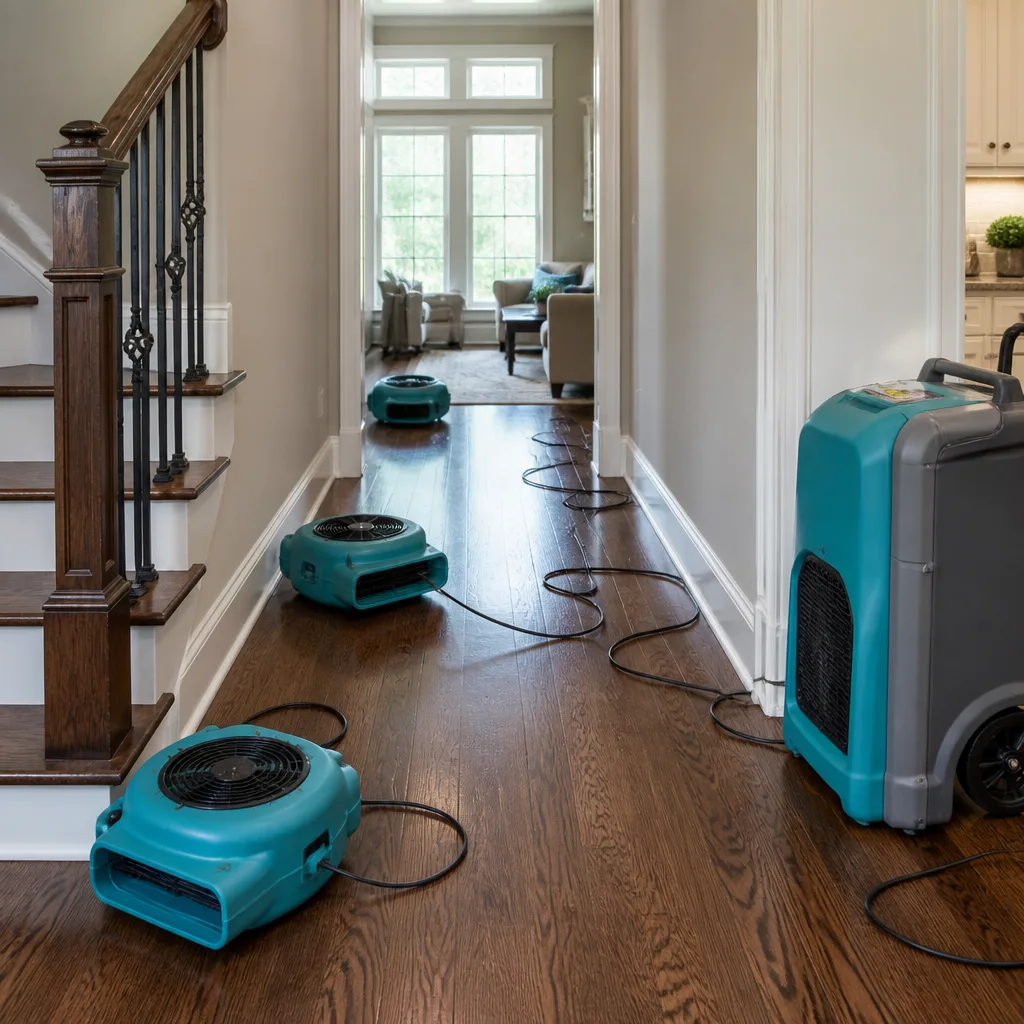
The equipment question is where most homeowners miscalculate. A rental dehumidifier removes moisture, but without a calibrated moisture meter, you cannot prove the material reached the dry standard. Wood framing is considered dry at 15% moisture content or below per IICRC S500. Drywall is typically targeted at 12% or lower. Your hand is not a moisture meter. Neither is the “feels dry” test.
California Legal Thresholds That Override the DIY Option
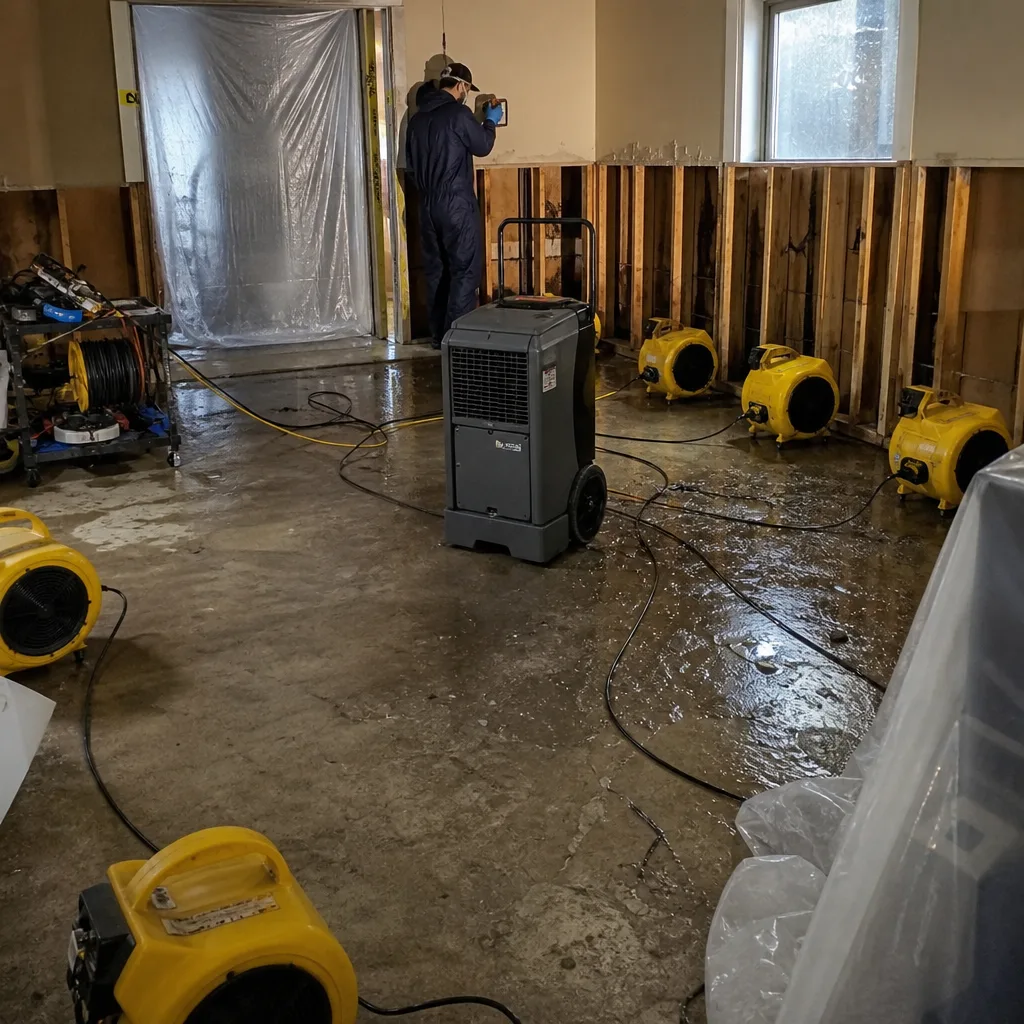
California law removes the DIY option in specific circumstances regardless of homeowner confidence or skill. These are not insurance preferences. They are legal requirements with penalty structures.
Mold exceeding 10 contiguous square feet. The California Health and Safety Code and the CDPH guidance require licensed contractors for mold remediation above this threshold. A 3×4 foot patch in a Mission Viejo bathroom hits 12 square feet. The 10-square-foot rule is measured by contiguous affected area, not total in the room. Two separate 6-square-foot patches in opposite corners do not trigger the threshold, but they often indicate a systemic moisture problem that DIY cannot address.
Any sewage or Category 3 water intrusion. This includes toilet backflow beyond the trap, flooding from outside sources, and any water that has passed through ground or building materials before entering. Category 3 water carries pathogenic agents. California OSHA regulations and IICRC S500 classify this as regulated work requiring specific PPE, containment, and antimicrobial protocols. Homeowner’s insurance policies in Orange County frequently contain clauses voiding coverage for unprofessional Category 3 handling.
Structural, electrical, or HVAC involvement. Any restoration requiring removal of load-bearing elements, exposure of electrical systems, or ductwork cleaning triggers contractor licensing requirements under California Business and Professions Code. This includes most fire restoration beyond surface cleaning and any water loss where ceilings have sagged or walls require removal beyond the bottom two feet.
Asbestos or lead-containing materials in homes built before 1980. Mission Viejo’s original construction boom ran from 1967 through the late 1980s. Many homes in neighborhoods like Casta del Sol and Granada contain acoustic ceiling texture, vinyl asbestos tile, or lead-based paint. Disturbing these materials without proper abatement certification is a violation of both federal EPA and California DTSC regulations.
We’ve arrived at jobs where homeowners began DIY mold removal, discovered suspect materials, and faced stop-work orders from Orange County Environmental Health. The delay in professional intervention often expanded the affected area by 30-50%.
The Documentation Gap: Why Insurers Deny Competent DIY Work
The central thesis of this guide: skill and documentation are separate variables. A homeowner can dry a space perfectly and still lose an insurance dispute. Here’s how that happens.
Insurance claims adjusters evaluate restoration work against documented standards, not outcomes. A room that is objectively dry but lacks a moisture log is, in claims terminology, “unverified drying.” The insurer is not obligated to accept visual inspection or homeowner testimony as proof of proper mitigation. This is particularly true in Mission Viejo’s competitive insurance market, where carriers have tightened documentation requirements significantly since 2020.
The key documents insurers expect:
- Baseline moisture readings taken within 24 hours of loss onset, with meter type, calibration date, and exact locations noted
- Daily psychrometric logs recording temperature, relative humidity, and specific humidity at set intervals
- Equipment placement diagrams showing dehumidifier and air mover positions with CFM ratings
- Material removal logs documenting square footage of discarded materials with photos
- Final moisture readings meeting or exceeding IICRC S500 dry standards for each material class
- Photo record with embedded timestamps showing condition at each phase
Professional restoration companies generate these documents as standard deliverables. At DryMark Restoration Mission Viejo home, every job includes a photo record on every visit and drying logs documented to IICRC, RIA, and IFA standards. These are not upsells. They are the evidence that converts a restoration invoice into a payable claim.
The homeowner who rents equipment and dries their own space has no comparable documentation trail. Equipment rental receipts prove you paid for a machine. They do not prove the machine achieved vapor pressure differential sufficient to pull moisture from structural materials. Before-and-after photos without moisture readings show visual change, not material dryness.
We’ve reviewed denied claims where homeowners produced photos of dry-looking walls and were still refused because “dry to the touch” is not a recognized standard. The insurer’s position, which courts have upheld, is that unverified drying leaves open the possibility of progressive damage from residual moisture. That possibility becomes the homeowner’s financial responsibility.
Mission Viejo’s Inland Climate and the Hidden Cost of Under-Drying
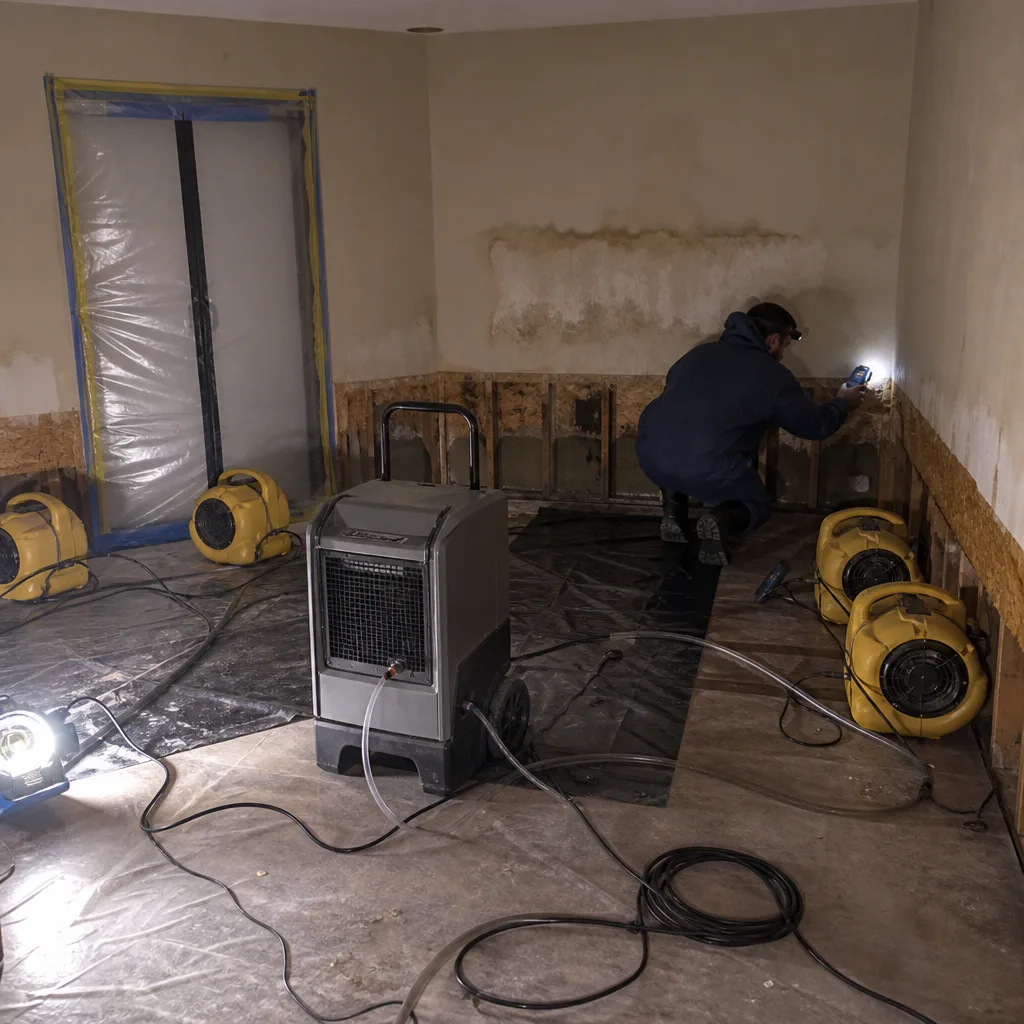
Mission Viejo sits in the Saddleback Valley, approximately 10 miles from the Pacific Ocean but shielded by the San Joaquin Hills. This geography creates a specific moisture profile that affects drying dynamics and mold risk timelines. Our Seasonal Damage Restoration Care for Mission Viejo covers year-round maintenance strategies for these conditions.
Summer conditions in Mission Viejo typically run 85-95°F with relative humidity in the 40-55% range. These numbers feel dry compared to coastal Orange County, but they are deceptive for restoration purposes. Inland valley homes experience wider temperature swings between day and night. A south-facing wall in a Mission Viejo home can reach 110°F surface temperature in July afternoon sun, then drop to 65°F by 10 PM. This temperature differential creates condensation potential inside wall cavities even when ambient humidity seems moderate.
The critical number is 12% moisture content in drywall. This is the approximate threshold where mold spores transition from dormant to active colonization given organic material and time. In Mission Viejo’s summer conditions, drywall with 12% trapped moisture behind a new paint layer will reach active mold growth within 6-8 weeks. We’ve documented this pattern repeatedly in neighborhoods from Aegean Hills to Madrid Del Lago.
Winter brings the opposite problem. December through February, marine layer influence penetrates further inland. Morning relative humidity in Mission Viejo can spike to 80-90% before burning off by noon. Natural drying slows dramatically. A homeowner who stops active drying because a wall “feels dry” in January afternoon conditions may find moisture readings climbing again by morning.
The professional difference is continuous monitoring. Our crews take moisture readings at consistent times, account for daily humidity cycles, and maintain active drying until materials reach stable dry standards across multiple readings. A rental dehumidifier running for 72 hours and then returned is not equivalent monitoring.
Specific Mission Viejo building characteristics compound the risk. Many homes in the 1968-1985 construction period used single-coat stucco over paper-backed lath with minimal drainage plane. Water intrusion at window or door openings travels laterally behind stucco rather than manifesting immediately inside. By the time interior drywall shows staining, the exterior sheathing may have been wet for weeks. DIY surface drying addresses the symptom while the structural moisture continues.
How to Build a Defensible DIY Documentation File
If you choose DIY for an appropriate Category 1 loss, you can improve your claims position by creating documentation that mimics professional standards. This requires discipline and specific equipment, but it is achievable. Our Water Damage Restoration Maintenance Checklist for Mission Viejo Homeowners provides a practical starting framework.
Required Equipment
- Pin-type moisture meter with species correction settings (Delmhorst or Protimeter brands, approximately $250-400)
- Infrared thermometer for surface temperature readings
- Hygrometer for relative humidity measurement
- Camera with timestamp capability (smartphone is acceptable if location services embed time and date)
Step-by-Step Documentation Protocol
- Establish baseline immediately. Before any drying equipment runs, take moisture readings at 12-inch intervals across all affected surfaces. Record exact locations: “north wall, 18 inches from floor, 24 inches from corner.” Photograph each reading with the meter display visible.
- Document the water source and stop. Photo the failed supply line, the stopped leak, or the resolved overflow. Include timestamp. This establishes Category 1 status at loss onset.
- Log equipment placement. Sketch room dimensions and mark dehumidifier and fan positions. Note manufacturer model and rated CFM or pint removal capacity. Keep rental receipts.
- Record daily conditions. Each morning before equipment runs, take room temperature, relative humidity, and surface moisture readings at the same locations as baseline. Log in a simple table: date, time, location, reading, meter used.
- Photograph materials removed. Every piece of discarded carpet pad, baseboard, or drywall with a measuring tape visible for scale. This documents mitigation necessity.
- Establish final dry standard. Continue until readings stabilize at or below 12% for drywall, 15% for wood framing, across three consecutive daily measurements. Photograph final readings. The stabilization pattern matters more than any single reading.
- Compile the file. Organize chronologically: source documentation, baseline readings, daily logs, equipment records, removal photos, final readings. Save as PDF with embedded metadata.
This file does not guarantee claim approval, but it shifts the conversation from “unverified drying” to “documented drying with verifiable standards.” The insurer may still dispute, but they must dispute specific numbers rather than dismiss the entire effort.
One critical gap remains: psychrometric data. Professional drying uses grain depression calculations to measure actual moisture removal capacity. Most homeowners lack the equipment and training for this. Your documentation file should acknowledge this limitation explicitly: “Drying verified by surface moisture content; psychrometric data not collected.” Transparency about limitations is more credible than omission.
The Handoff Point: Switching from DIY to Professional Without Voiding Coverage
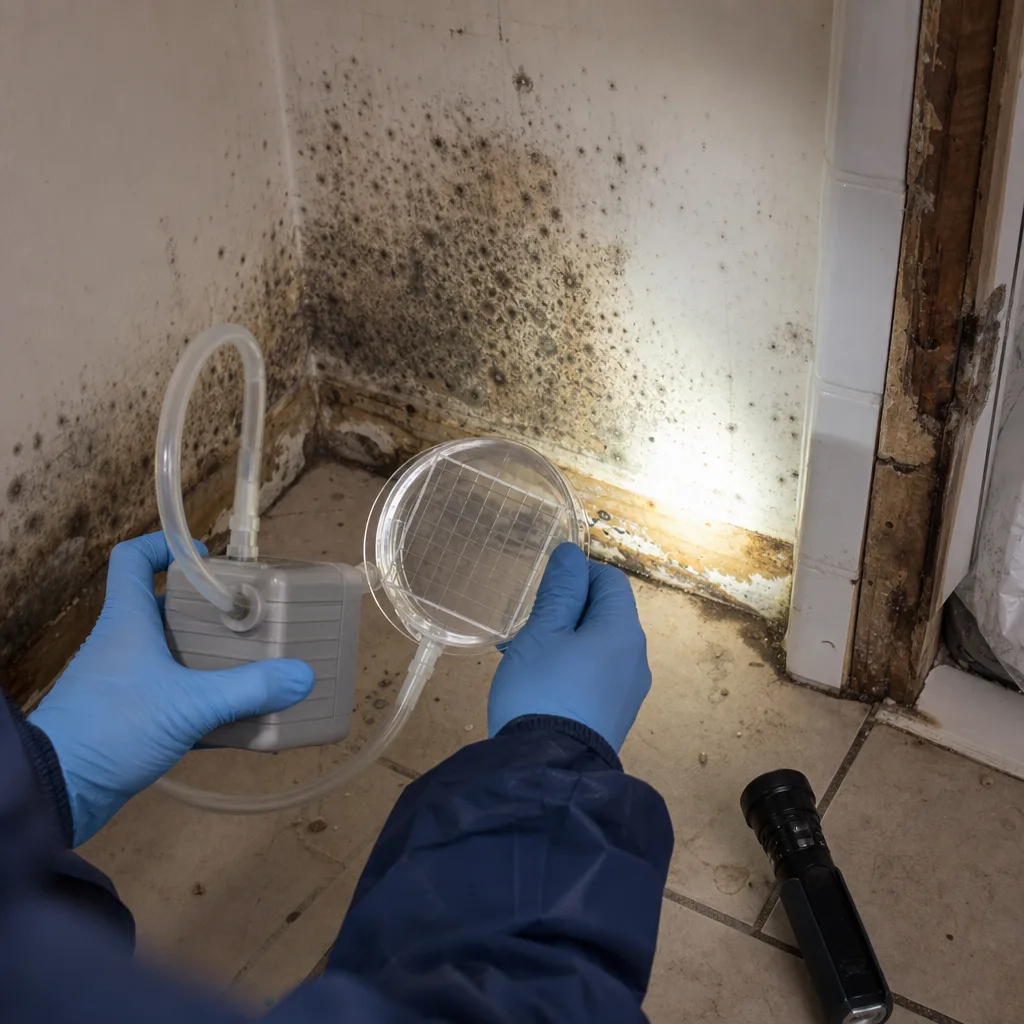
The most dangerous moment in DIY restoration is recognizing you’ve exceeded your capacity but hesitating to call professionals because you fear the “partial DIY” stigma. This hesitation destroys more claims than the DIY start itself.
Insurance policies do not generally void coverage because a homeowner attempted initial mitigation. They void coverage when unprofessional work causes additional damage or when documentation gaps prevent loss adjustment. The handoff is legally and practically viable if executed correctly.
Stop work immediately when any of these conditions appear:
- Moisture readings fail to improve after 48 hours of active drying
- Water has traveled to an adjacent room or lower level
- Odor develops or changes character (musty, sour, or sewage-like)
- Visible mold appears, regardless of size
- Structural materials show deformation: sagging drywall, buckling hardwood, warped subfloor
- You discover materials you cannot identify (possible asbestos, unknown insulation type)
- The loss occurred more than 48 hours before you began active drying
To execute the handoff:
- Photograph current conditions comprehensively before any professional arrives. This establishes the “DIY endpoint” condition.
- Gather all documentation created to date: receipts, photos, logs, notes. Provide copies to the restoration company.
- Request that the professional company conduct independent baseline readings and document their starting point separately from your records. This creates parallel documentation chains.
- Explicitly disclose the DIY period to your insurance adjuster and the restoration company. Concealment is more damaging than the DIY attempt itself.
- Authorize the professional company to document any conditions resulting from delayed or incomplete drying. This may include expanded material removal or additional antimicrobial treatment. The documentation protects you from future dispute.
We’ve accepted handoff jobs throughout Mission Viejo where homeowners began work, recognized the limits, and called us. In every case where documentation was transparent, insurance coverage remained intact. The 365-Day Done Right Promise under The Haven Standard applies to these jobs exactly as to any other.
The critical error is continuing DIY work after warning signs appear because you “don’t want to make it worse by admitting defeat.” Water damage is not a test of character. It is a physics problem with documentation requirements. Professional intervention at the correct moment preserves more value than prolonged DIY effort.
Cost Comparison: Real Numbers for Mission Viejo Homeowners
Pricing transparency is central to The Haven Standard. Haven Standard, Clause 1: a written price is delivered before anyone starts work, every time, with no exceptions. The numbers below reflect typical Mission Viejo market ranges for the decision scenarios this guide addresses. Your specific loss may vary based on square footage, material class, and access conditions.
| Scenario | DIY Cost Range | Professional Cost Range | Documentation Value |
|---|---|---|---|
| Category 1 water, <10 sq ft drywall, no structural involvement | $180-350 (equipment rental, moisture meter, supplies) | $450-850 (mitigation only, no reconstruction) | Professional: full IICRC drying log, photo record, insurer-ready documentation; DIY: self-generated file, variable acceptance |
| Category 1 water, 10-50 sq ft, wall cavity involved | $350-600 (rental, supplies, possible tool purchase) | $1,200-2,800 (mitigation with limited material removal) | Professional: psychrometric data, equipment CFM documentation, daily logs; DIY: generally insufficient for claims |
| Surface mold, <10 sq ft, non-porous materials | $75-150 (cleaner, PPE, HEPA vacuum rental) | $400-900 (contained remediation with air scrubbing) | Professional: clearance testing documentation, chain of custody; DIY: limited, may not satisfy insurer |
| Category 2 or 3 water, any size | Not recommended; potential coverage void | $2,500-8,500+ (varies by contamination level and square footage) | Professional: required for coverage; DIY: high denial risk |
| Fire/smoke, surface only vs. structural | $200-500 (cleaning supplies, ozone generator rental for minor odor) | $3,500-15,000+ (mitigation through reconstruction) | Professional: soot testing, deodorization logs, structural assessment; DIY: limited to very minor incidents |
These ranges are for mitigation only, not reconstruction. Reconstruction - drywall replacement, flooring, painting - is separate scope, scheduled and priced in writing like any remodeling work. Water Damage Restoration in Mission Viejo through DryMark Restoration Mission Viejo includes full documentation packages as standard, not additional charges.
The cost comparison that matters is not DIY versus professional out-of-pocket. It is total cost including claim outcomes. A $300 DIY effort that produces a denied $4,000 subsequent damage claim is not cheaper than a $1,500 professional mitigation with full documentation and approved coverage.
Free Second Opinion on Any Written Estimate: bring a competitor’s quote and we will review it at no charge. This applies to DIY documentation packages as well. If you’ve compiled a file and want professional assessment of its claims defensibility, we will review and advise without cost or obligation.
Common Mistakes to Avoid
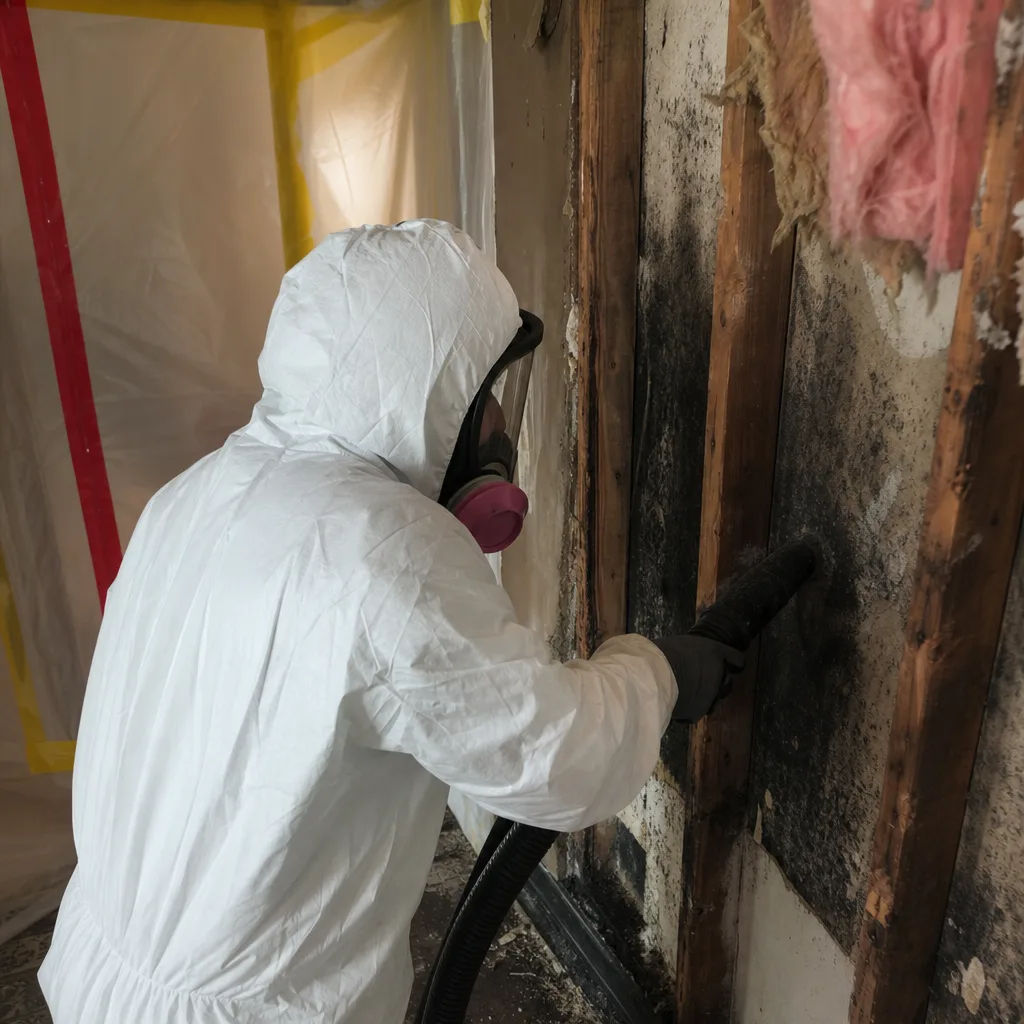
- Renting equipment without understanding CFM requirements. A residential dehumidifier rated at 50 pints per day cannot handle a 400 square foot affected area with 8-foot ceilings. The math is simple: affected cubic feet divided by equipment capacity. Most homeowners guess and undersize.
- Stopping at visual dryness. In Mission Viejo’s inland climate, drywall can appear dry while retaining 18-20% moisture content inside the wall cavity. Surface readings miss this entirely. Pin-type meters with probe extensions are required.
- Removing baseboards without documenting the water line. The height of water wicking on drywall is evidence of loss severity. Photo it before removal. We’ve seen adjusters dispute vertical extent because the homeowner discarded the physical evidence.
- Using bleach on mold. Bleach does not penetrate porous materials and can add moisture to the problem. It also produces no documentation. For any mold concern, professional assessment produces testable, insurable records.
- Delaying the handoff decision. Every day of continued DIY after warning signs appear expands the affected area and weakens documentation. The correct moment to call is when you first question whether you should continue.
- Failing to notify insurance within required timeframes. Most policies require prompt notification, defined variously as 24-72 hours. DIY work does not extend this window. Document your notification with confirmation numbers.
- Ignoring Mission Viejo’s specific building characteristics. Slab-on-grade construction in neighborhoods like Mission Viejo North, single-coat stucco systems, and original galvanized plumbing in 1970s builds all create water behavior patterns that differ from national averages. Local experience matters for accurate scope.
When to Call a Professional
Call professional restoration immediately for any Category 2 or 3 water loss, any fire or smoke damage beyond contained cooking incidents, any mold exceeding 10 square feet, any sewage intrusion, any structural involvement, any electrical or HVAC contact, any loss in a home built before 1980 with unknown materials, and any situation where you cannot see and access all affected areas.
Call if moisture readings fail to improve after 48 hours of active DIY drying. Call if odor develops, materials deform, or the loss extends beyond the original room. Call if you discover materials you cannot identify or if more than 48 hours passed between loss onset and your intervention.
Mold Remediation in Mission Viejo and Fire & Smoke Damage Restoration in Mission Viejo through DryMark Restoration Mission Viejo includes the full documentation package: written price before work begins, photo record on every visit, daily drying logs to IICRC standards, and the 365-Day Done Right Promise backed by The Haven Standard. Free estimates in Mission Viejo - call (657) 297-0972. Live person answers, 24 hours a day, 7 days a week, with no voicemail on emergency lines.
Frequently Asked Questions
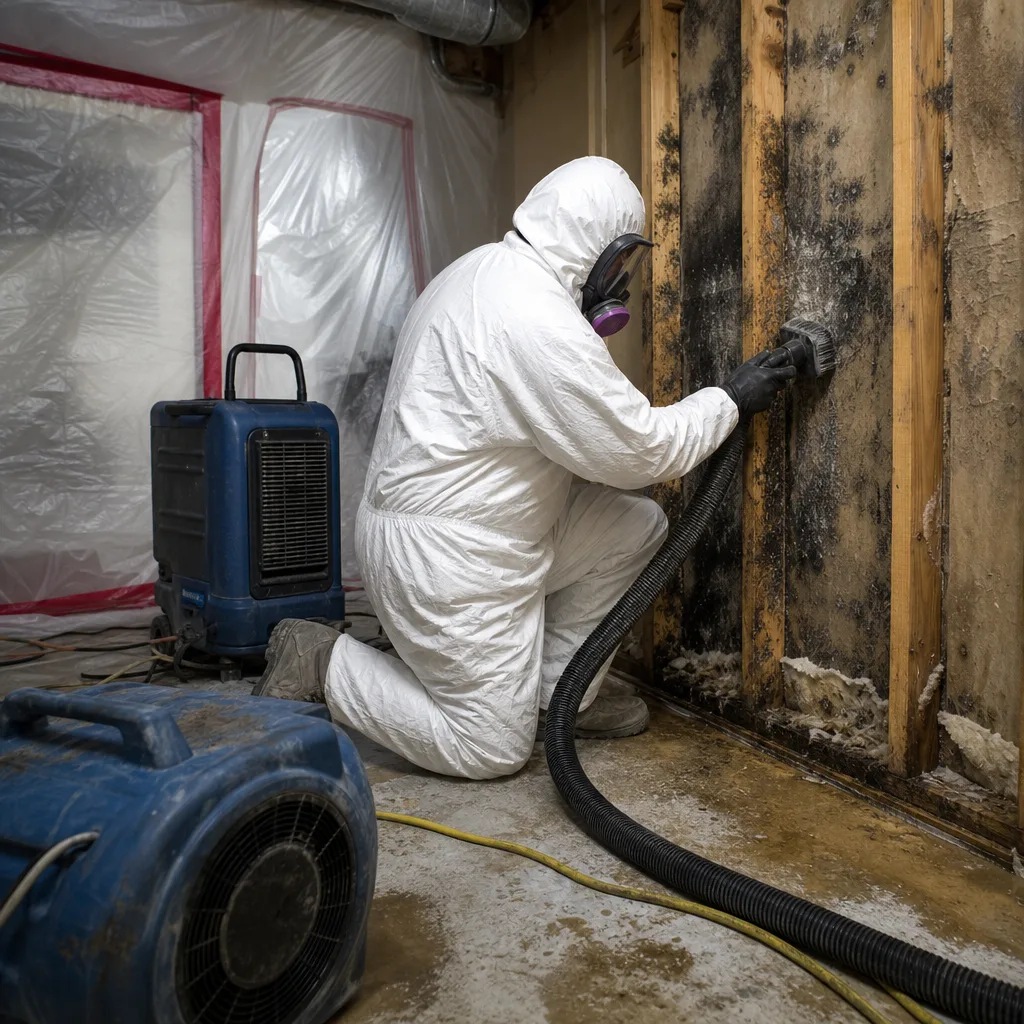
Insurance may cover DIY mitigation if you produce documentation meeting their drying standards, but most carriers apply strict documentation requirements that DIY efforts fail to satisfy. The safer path is professional restoration with IICRC-documented drying logs, which carriers recognize as verifiable evidence. For more guides & resources on navigating claims and restoration, visit our blog. Call (657) 297-0972 for a free estimate - estimates are free, and documentation is included as standard.
DryMark Restoration Mission Viejo maintains live phone coverage 24 hours a day, 7 days a week with no voicemail on emergency lines. For active water losses, our typical response time in Mission Viejo is under 90 minutes. Speed matters because water moves continuously through capillary action; every hour of delay expands the affected area. Call (657) 297-0972 - a live person will answer.
California requires licensed contractors for mold exceeding 10 contiguous square feet. Below that threshold, surface cleaning on non-porous materials is permissible, but without clearance testing documentation, insurers may dispute whether remediation was adequate. Professional remediation includes air scrubbing, containment, and post-remediation verification that creates an insurable record. For a free assessment of your specific situation, call (657) 297-0972.
At DryMark Restoration Mission Viejo, we coordinate directly with your adjuster as part of standard service. This includes photo documentation, written scopes, and direct communication about drying progress and material removal necessity. You remain the policyholder and final decision-maker, but the documentation burden shifts to us. This coordination is included, not an additional service. Call (657) 297-0972 to discuss your claim.
Stop work immediately when you recognize limits, photograph current conditions, gather all documentation, and call for professional assessment. Transparent handoff with documented conditions generally preserves insurance coverage. Concealment of DIY work is more damaging than the DIY attempt itself. DryMark Restoration Mission Viejo accepts handoff jobs and documents the transition point independently. Call (657) 297-0972 for next steps.
Mission Viejo’s inland valley location creates wider temperature swings than coastal Orange County, with summer surface temperatures reaching 110°F on south walls and dropping to 65°F overnight. This differential causes condensation in wall cavities even when ambient humidity seems moderate. Marine layer influence in winter slows natural drying. Professional monitoring accounts for these cycles; DIY timing based on “feels dry” assessments frequently misses residual moisture that activates mold within 6-8 weeks.
The Bottom Line
The DIY versus professional restoration decision is not about whether you are capable of operating a dehumidifier. It is about whether you can produce documentation that converts your effort into a paid insurance claim. For Category 1 water under 10 square feet with an accessible source, DIY is viable if you commit to rigorous moisture logging and photographic documentation. For everything else - larger water losses, mold beyond 10 square feet, any Category 2 or 3 water, fire or smoke damage, sewage, or structural involvement - California law and insurance documentation requirements make professional restoration the lower-risk path.
The specific risk in Mission Viejo is under-drying in an inland climate that conceals residual moisture behind apparently dry surfaces. The 6-8 week mold timeline is real, documented, and expensive. Professional restoration with daily moisture logs, photo records, and written scopes to IICRC standards protects both the structure and the claim.
The Haven Standard exists because we have seen what documentation gaps cost homeowners. Written price before work begins. Photo record on every visit. Drying logs that turn invoices into payable claims. These are not marketing promises. They are the operational standards that define every job we accept.
Call (657) 297-0972 for a free estimate. A live person answers, 24 hours a day, 7 days a week. Or bring any competitor’s written estimate for a free second opinion. Documentation is not an upsell at DryMark Restoration Mission Viejo. It is the foundation of everything we do.
Written by Alicia Brennan, Owner at DryMark Restoration Mission Viejo, serving Mission Viejo since 2011.